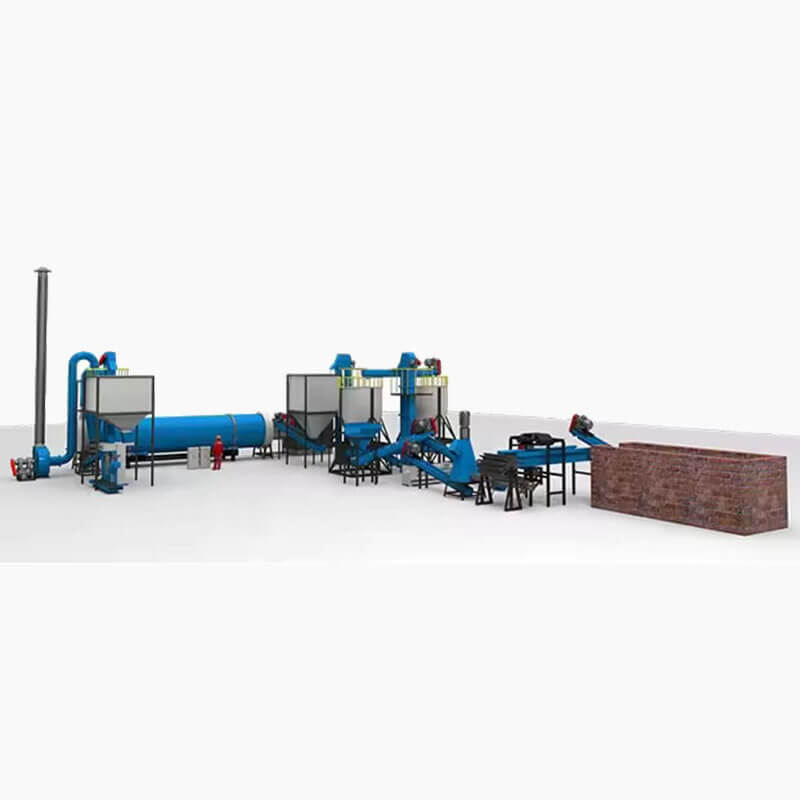
Food Residue Drying Production Line
Full-Auto Low-Temp Nutrition Retention Drying Plant for Food Processing Pomace & Dregs Recycling
Food Residue Drying Production Line is a professional industrial drying system customized for food processing by-products, including fruit pomace, vegetable residues, grain dregs, bakery waste and beverage residues. This line adopts anti-stick dispersion structure + low-temperature gradient drying + anti-fermentation technology, reducing 70%-85% high moisture to commercial 10%-12%, realizing high-value feed-grade and fertilizer-grade resource recycling.
Anti-Stick
Anti-Fermentation
Fully Automatic
What is Food Residue Drying Production Line?
Food residues refer to clean by-products generated during industrial food and beverage processing, including apple pomace, orange peel residue, vegetable stems, grain bran residues, bean dregs, wine residues and bakery scraps. These fresh residues contain a large amount of dietary fiber, plant protein and natural active substances, with extremely high recycling value.
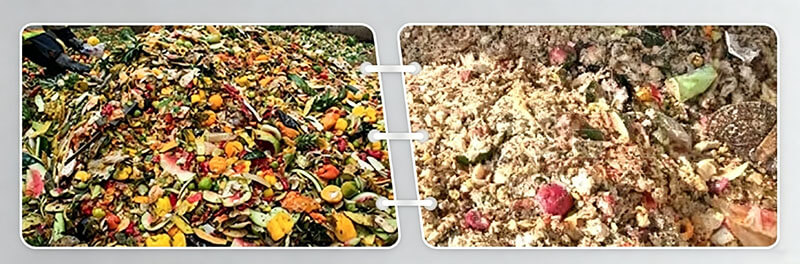
However, fresh food residues usually have ultra-high moisture of 70%-85%. Under natural conditions, they are easy to ferment, acidify, mildew and rot within 24 hours, causing resource waste and workshop environmental odor. Traditional high-temperature dryers often lead to nutrient inactivation, material scorching and color darkening, greatly reducing commercial value. Our dedicated Food Residue Drying Production Line adopts mild low-temperature drying and targeted anti-stick technology, perfectly adapting to various flexible and sticky food residues, retaining maximum nutritional activity, and providing standardized industrial recycling solutions for food processing enterprises.
Contents
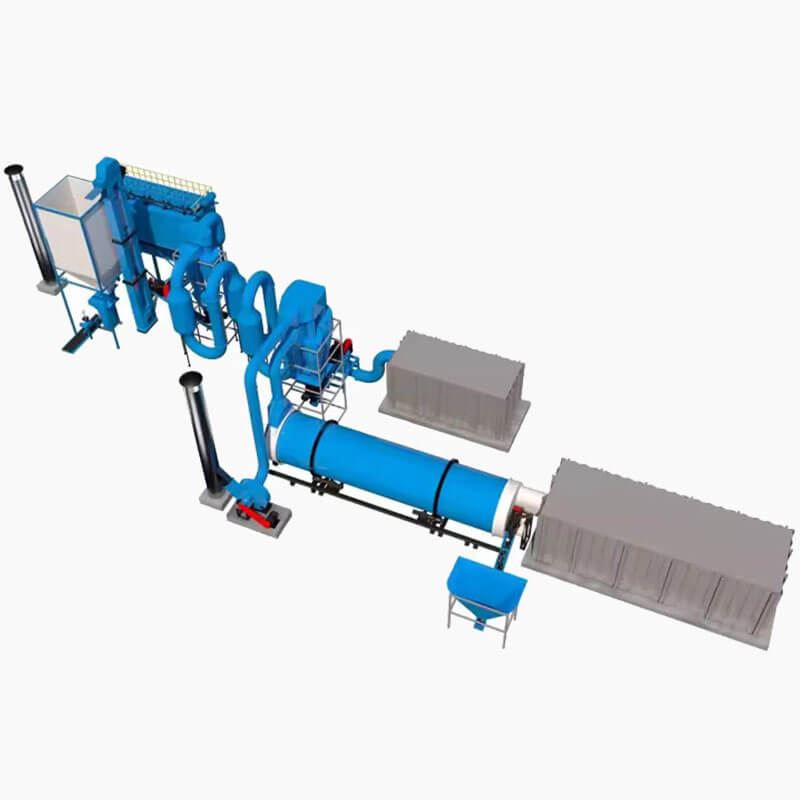
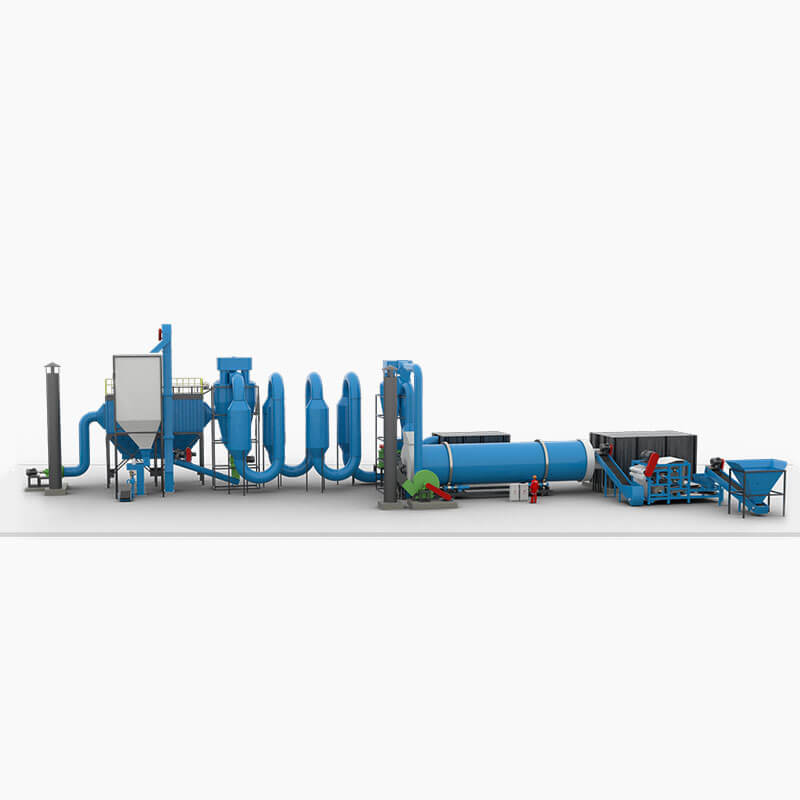
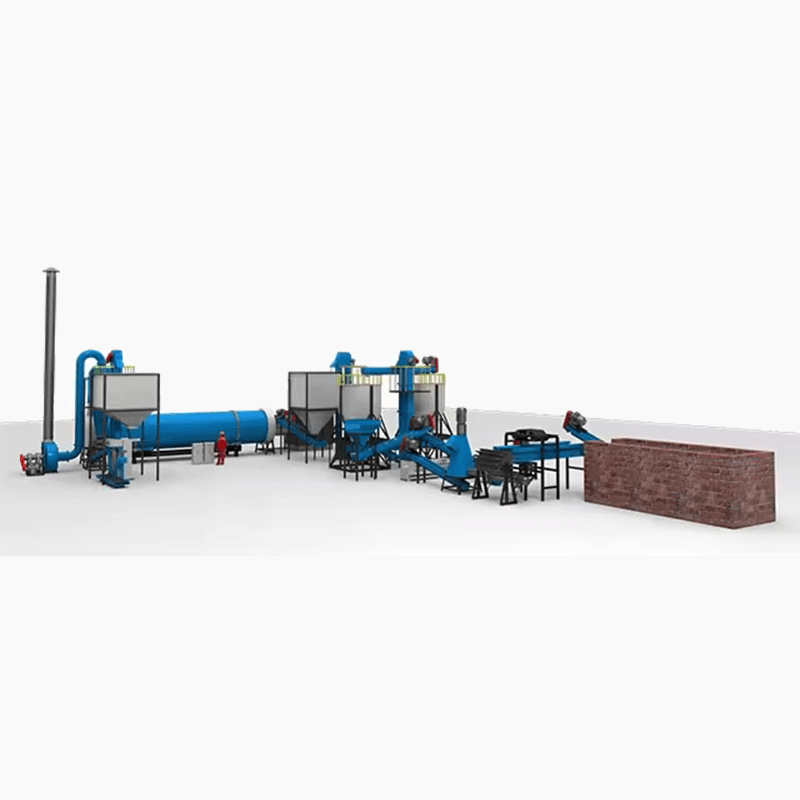
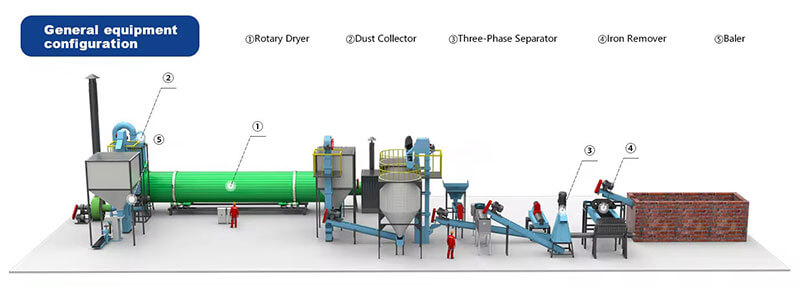
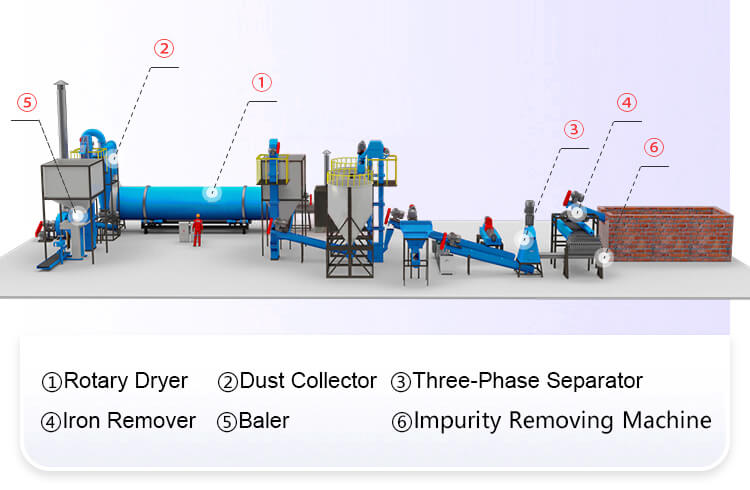
Complete Equipment Composition of Food Residue Drying Production Line
1. Food-Grade Anti-Stick Drying Host (Core)
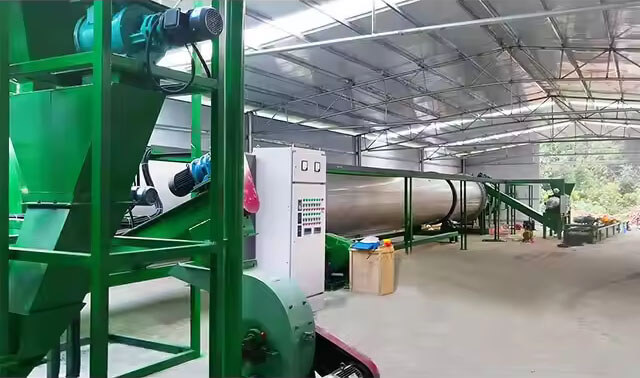
The core drying host adopts optimized 3-pass nested energy-saving structure, equipped with food-grade anti-stick coating and flexible material lifting plates. Aiming at the soft and sticky characteristics of fruit and vegetable residues, it realizes continuous flipping, scattering and material breaking during operation, completely solving wall sticking, agglomeration and local overheating. The multi-layer heat preservation structure ensures uniform and mild heat exchange, avoiding residue scorching and nutrition loss.
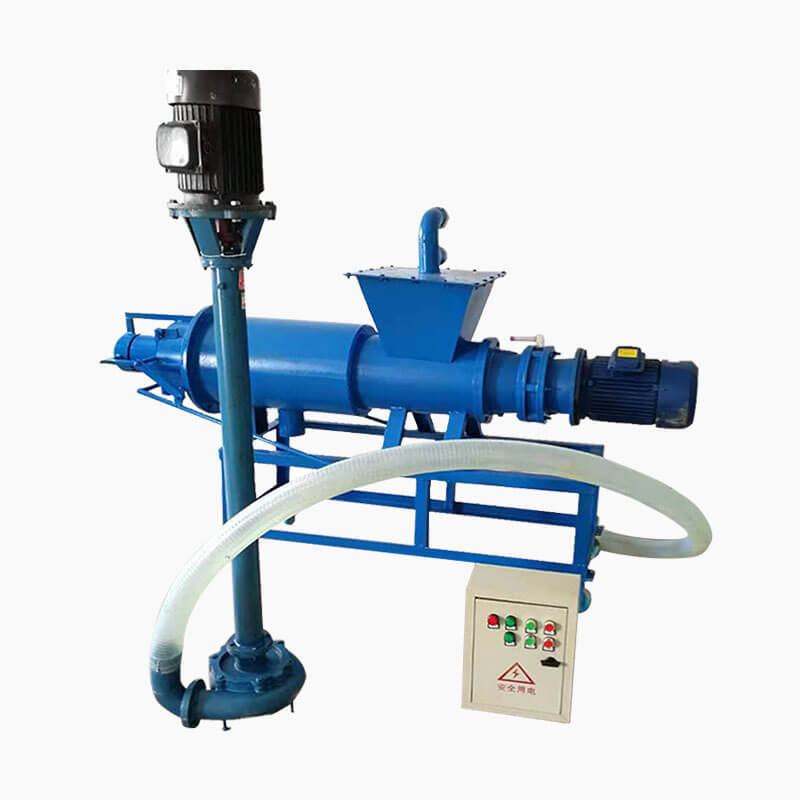
2. Flexible Residue Pre-Crushing & Uniform Feeding System
Specially designed for irregular food residues such as fruit peels, vegetable fragments and bulk dregs. The integrated crushing and dispersing device evenly breaks bulk and tangled residues, eliminates bridging and uneven feeding, and makes loose and uniform materials. It provides stable feeding conditions for subsequent gradient drying and ensures consistent drying effect of each batch of residues.
3. Low-Temp Anti-Fermentation Gradient Drying System
Exclusive three-stage mild drying process for organic food residues: low-temperature pre-dehydration inhibits bacterial fermentation and stops deterioration in advance; medium-temperature uniform deep drying removes internal bound water; constant-temperature cooling shaping locks natural color and nutrients. The whole process avoids high-temperature damage, effectively retaining vitamins, dietary fiber and active ingredients of food residues.
4. Waste Heat Recovery & Dust Purification System
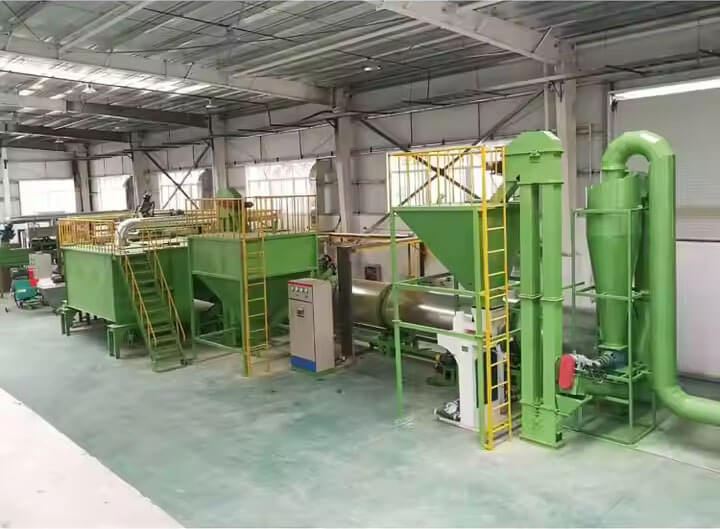
The whole line adopts micro-negative pressure fully sealed operation to prevent fine organic powder overflow. Equipped with high-efficiency pulse dust removal equipment, the material recovery rate is over 99.5%, no waste loss. The circulating waste heat recovery device recycles waste hot air for secondary heating, reducing comprehensive energy consumption by more than 40%, realizing energy-saving, clean and environmentally friendly production.
5. Intelligent Residue Adaptive PLC Control System
The system presets parameter models for dozens of food residues (fruit pomace, vegetable dregs, grain residues, etc.). It can automatically match drying temperature, drum speed and air volume according to different material moisture and viscosity. It supports 24-hour unmanned continuous operation, with over-temperature protection and fault self-alarm functions, ensuring stable and standardized finished product quality.
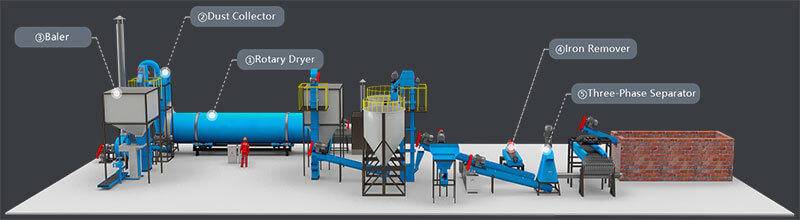
Core Product Advantages of Food Residue Drying Production Line
1. Universal Adaptation for All Kinds of Food Residues
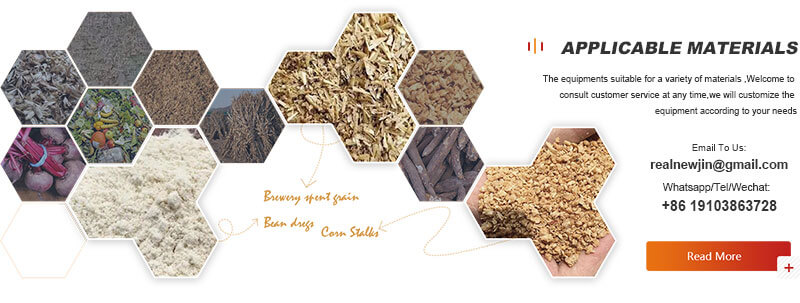
This production line breaks the limitation of single-material dryers, covering almost all food processing residues: fruit pomace (apple, citrus, grape), vegetable residues, bean dregs, wine residues, grain bran, bakery scraps and other organic dregs. One line for multiple purposes greatly improves equipment utilization and reduces enterprise investment cost.
2. Low-Temp Nutrition Locking & No Quality Deterioration
Different from traditional high-temperature baking, the gradient mild drying technology avoids protein denaturation, vitamin decomposition and active substance loss. The dried food residues retain natural color, original flavor and complete nutritional components, with no burnt spots or dark color. The feed grade and commercial value are far higher than ordinary dried materials.
3. Professional Anti-Stick & Anti-Fermentation Design
Aiming at the easy-sticking and easy-fermentation characteristics of fresh food residues, the combination of pre-dispersion system and anti-stick drum structure completely solves material agglomeration and wall sticking. The low-temperature rapid dehumidification technology inhibits microbial reproduction from the source, preventing residue acidification and mildew during drying process.
4. Ultra Energy-Saving & Low Operating Cost
The 3-pass nested heat preservation structure reduces heat dissipation loss, and the waste heat circulating recovery system greatly improves thermal efficiency. The comprehensive energy saving rate is more than 40% higher than traditional single-cylinder drying lines. Multiple clean heat sources are optional, with low failure rate and simple daily maintenance, effectively reducing long-term production costs.
5. High-Value Resource Recycling
After drying treatment, the moisture of food residues is stably controlled at 10%-12% commercial standard, which can be stored for a long time without mildew and deterioration. The finished materials can be widely used as high-quality raw materials for livestock and poultry feed, organic fertilizer, microbial culture medium and biomass fuel, turning food processing waste into high-profit by-products.
6. Full-Auto Continuous & Safe Production
The integrated assembly line realizes automatic feeding, dispersion, drying, dust removal and discharging. It supports 24-hour uninterrupted industrial operation, equipped with multiple safety protection devices. The whole production process is clean and odor-free, meeting food factory workshop environmental standards.
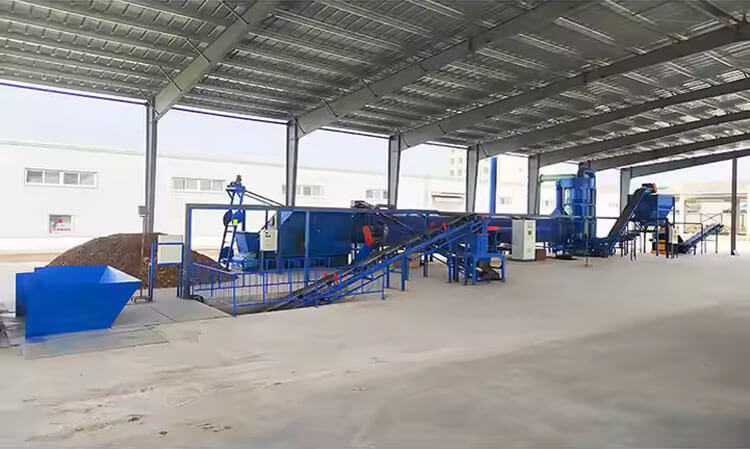
Working Principle & Production Process of Food Residue Drying Production Line
Working Principle
The Food Residue Drying Production Line adopts targeted low-temperature anti-fermentation drying principle for organic food processing residues. Fresh high-moisture food residues are sent to the pre-processing system to crush bulk and tangled materials, disperse agglomerated residues and eliminate feeding blockage.
Uniform loose materials enter the 3-pass anti-stick drying drum stably. With the rotation of the drum, the special lifting and scraping plates continuously flip and scatter sticky residues to avoid wall sticking and local accumulation. Through three-stage gradient low-temperature heat exchange, the materials complete pre-fermentation inhibition, deep dehydration and cooling shaping. Combined with waste heat recovery and dust purification system, it finally outputs dry, bright and high-nutrient food residue finished products.
Standard Production Flow
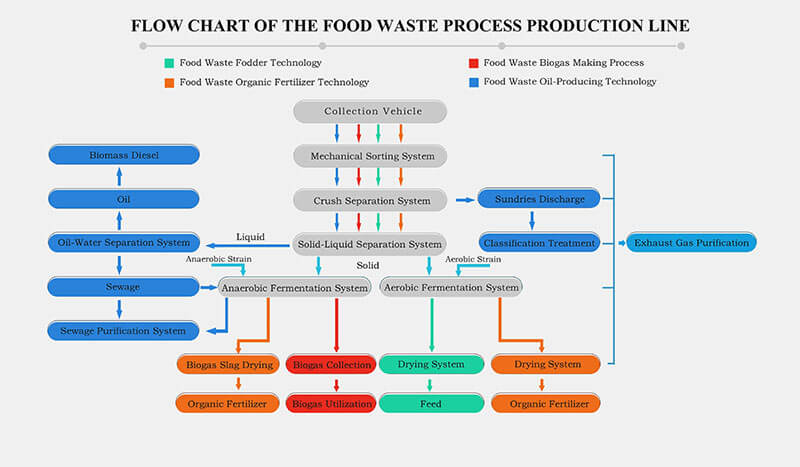
Fresh Food Residue Feeding → Pre-Crushing & Dispersion → Uniform Quantitative Feeding → Anti-Stick Continuous Drying → Low-Temp Anti-Fermentation Dehydration → Waste Heat Recovery & Dust Purification → Constant-Temp Shaping → Dry Residue Discharging → Feed Processing / Organic Fertilizer / Biomass Utilization
Application Scenarios of Food Residue Drying Production Line
This universal food residue drying production line is specially developed for waste recycling of food, fruit, vegetable, beverage and grain processing factories. It solves the pain points of fresh food residues such as easy fermentation, mildew, short storage time and low utilization rate. The dried residues retain rich dietary fiber, protein and active nutrients, and are widely used in livestock and poultry feed processing, organic fertilizer production, microbial planting medium and biomass energy industries. It is essential turnkey equipment for food factories to realize clean production and circular economy.
Core Application Fields: Fruit & vegetable processing plant residue recycling, grain and oil factory dregs treatment, beverage factory pomace disposal, feed raw material production, agricultural organic fertilizer processing
Real Project Cases of Food Residue Drying Production Line
Case 1: 8T/H Fruit Pomace Drying Project | Spain Fruit Processing Factory
Project Info: The customer produces a large amount of apple and citrus pomace every day. Traditional drying leads to serious nutrient loss and dark material color. Our low-temperature gradient drying line retains the natural color and nutrition of fruit pomace. The finished products are sold as high-grade feed raw materials, bringing stable additional profits to the enterprise.
Case 2: 6T/H Vegetable Residue Drying Line | Netherlands Agricultural Processing Enterprise
Project Info: The customer’s vegetable residues are soft, sticky and easy to rot. Our anti-stick full-automatic production line solves material agglomeration and fermentation problems thoroughly. The energy-saving design reduces daily operating costs, and the clean and odor-free production process meets EU environmental protection standards.
Case 3: 12T/H Multi-Food-Residue Recycling Project | Thailand Food Industrial Park
Project Info: The customer needs to process mixed bean dregs, grain residues and fruit pomace. Our universal drying line realizes one-line multi-purpose production, with strong material adaptability and stable 24-hour operation. It helps the industrial park realize centralized and standardized food waste resource recycling.
Technical Parameters of Food Residue Drying Production Line
| Specification | Input Capacity(t/d) | Output(t/d) | Raw Material Moisture(%) | Dried Material Moisture(%) | Total Power(kw) | Area |
| NJCG2006/3 | 76.93 | 1.08-0.27 | 45-75% | 14-18% (Adjustable) | 28-35 | 8m*12m |
| NJCG2008/3 | 105.19 | 1.48-0.37 | 45-66 | 8m*15m | ||
| NJCG2010/3 | 133.45 | 1.88-0.46 | 56-78 | 8m*18m | ||
| NJCG2012/3 | 161.71 | 2.57-0.64 | 60-82 | 8m*20m | ||
| NJCG2212/3 | 183.05 | 2.92-0.72 | 65-85 | 8m*20m | ||
| NJCG2512/3 | 204.72 | 3.26-0.81 | 90-125 | 10m*20m |
Get Custom Food Residue Drying Solution
Our professional Food Residue Drying Production Line solves the core pain points of food processing residues such as easy sticking, easy fermentation, nutrition loss and low recycling value. With universal multi-residue adaptation, low-temperature nutrition retention, ultra energy-saving and full-automatic continuous operation advantages, it provides one-stop turnkey resource recycling solutions for global food processing enterprises, helping customers turn industrial by-products into high-value commodities and improve overall economic benefits.
Contact us now to get free model selection, plant layout design and accurate project quotation!
FAQs of Food Residue Drying Production Line
Q1: What kinds of materials can this food residue drying line process?
A: It covers almost all clean food processing organic residues, including fruit pomace, vegetable stems and leaves, bean dregs, grain bran residues, wine residues, bakery scraps and other high-moisture organic dregs, with extremely strong versatility.
Q2: What is the difference between food residue dryer and food waste dryer?
A: Food residues are clean processing by-products with high nutritional value, requiring nutrition retention and anti-fermentation. Food waste is oily catering garbage focusing on sterilization and deodorization. Our line is professionally optimized for nutrient-rich food residues to maximize recycling value.
Q3: How to prevent food residues from fermenting and deteriorating during drying?
A: Adopt low-temperature rapid pre-dehydration technology to inhibit microbial activity in the first place, matched with continuous dispersion and sealed drying environment. It completely avoids fermentation, acidification and mildew during processing.
Q4: What is the best moisture standard for dried food residues?
A: The commercial standard moisture is 10%-12%. Within this range, the food residues can be stored for a long time without mildew, caking and secondary fermentation, maintaining optimal nutritional and economic value.
Q5: Will the drying process damage residue nutrition?
A: No. The whole process adopts mild gradient low-temperature drying, avoiding high-temperature scorching and nutritional decomposition. Vitamins, dietary fiber and protein are retained to the maximum extent, ensuring high feed-grade quality.