Bean Dregs Dryer
Industrial Anti-Stick Low-Temp Okara Rotary Dryer for Soybean Residue Drying
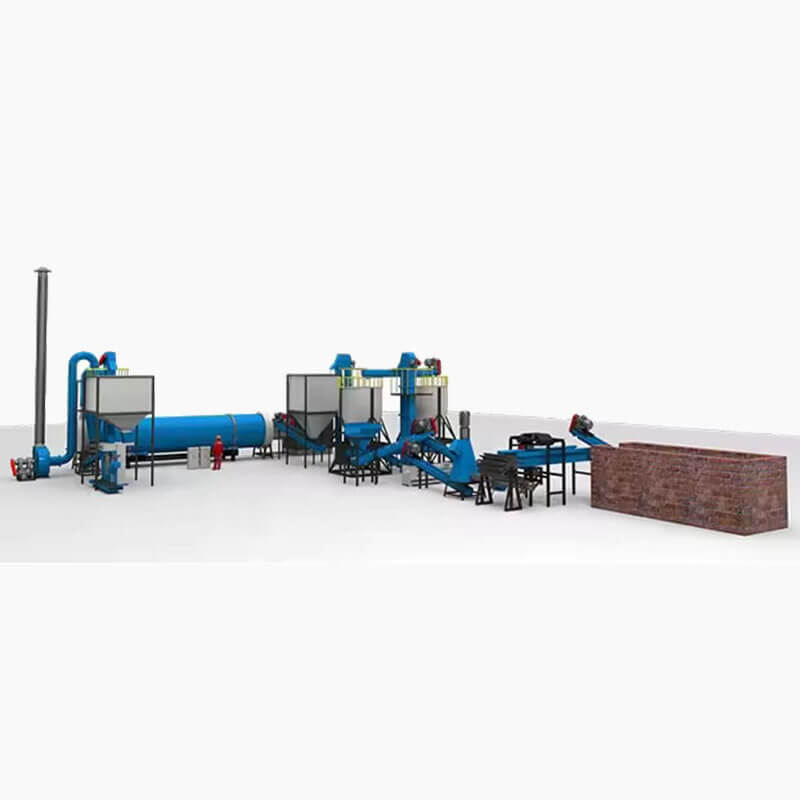
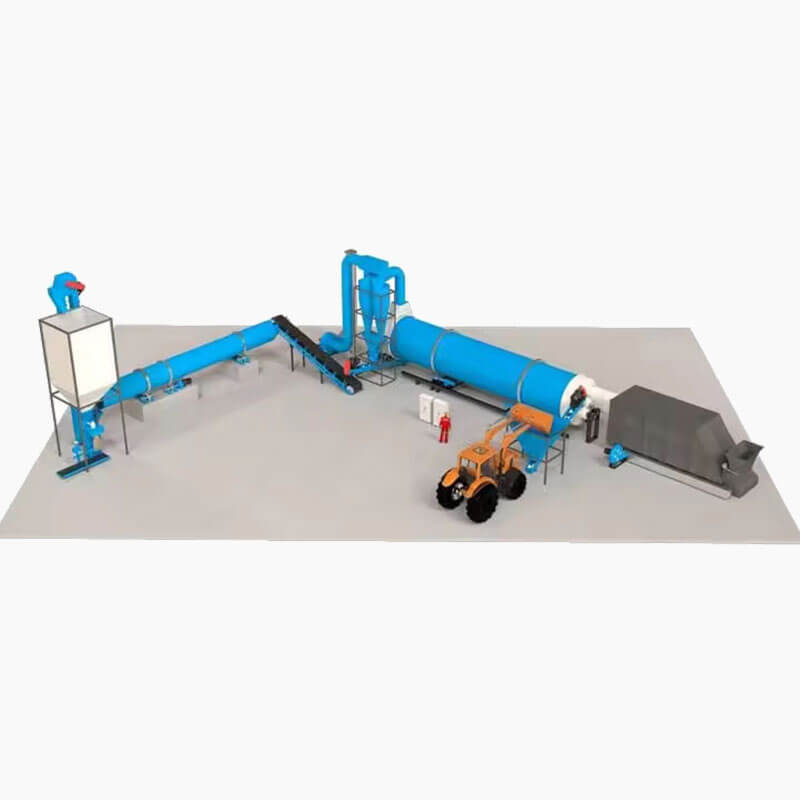
Our bean dregs dryer, also known as okara dryer, is a professional industrial drying equipment customized for high-viscosity, high-protein wet soybean residues. This machine adopts exclusive anti-stick dispersion and low-temperature gradual drying technology, stably reducing raw okara moisture from 55%-60% to commercial standard 12%-15%.
Anti-Stick Design
Low-Temp Drying
Uniform Dehydration
What is Bean Dregs Dryer?
Bean dregs (okara) are the main by-products of soybean milk, tofu and soybean product processing, containing rich crude protein, dietary fiber and trace nutrients. It is a high-quality raw material for livestock and poultry feed, organic fertilizer and biomass fuel. As a renewable agricultural residue, okara has extremely high recycling value for food processing factories.
Fresh wet bean dregs have a moisture content of 55%-60% with fine texture and strong viscosity. It is extremely prone to sticking, agglomeration, mildew, bacterial growth and protein oxidation at room temperature, which will cause resource waste and environmental pollution if not processed in time. Traditional high-temperature dryers easily cause protein denaturation, nutrient loss, material pasting and wall adhesion, resulting in low feed grade and frequent equipment shutdown cleaning. Our dedicated bean dregs rotary dryer solves all industry pain points with professional anti-stick structure and low-temperature nutrient-preserving drying technology, helping factories turn waste okara into high-value commercial feed products.
Contents
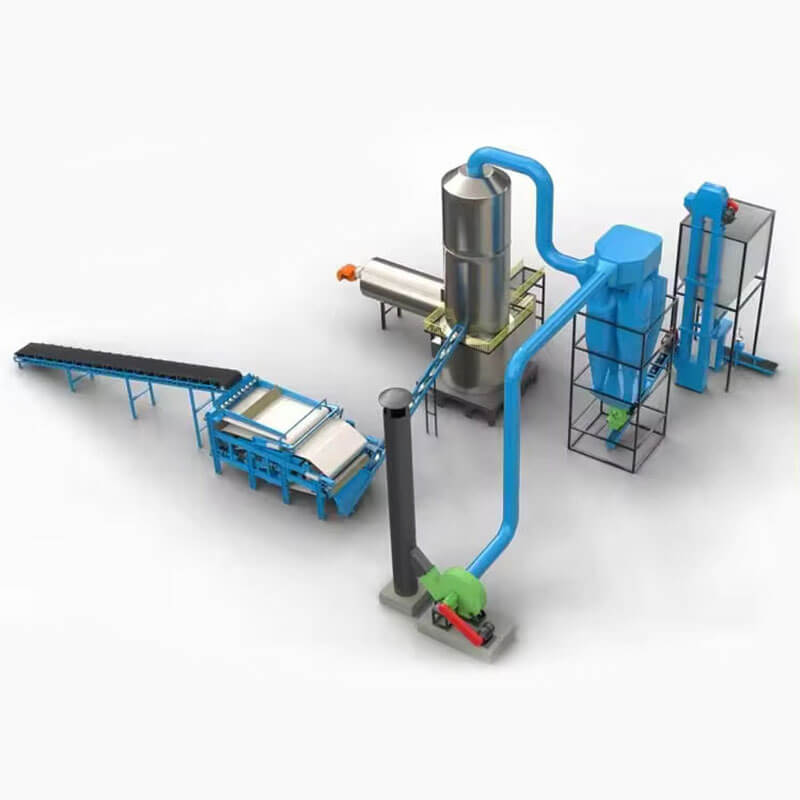
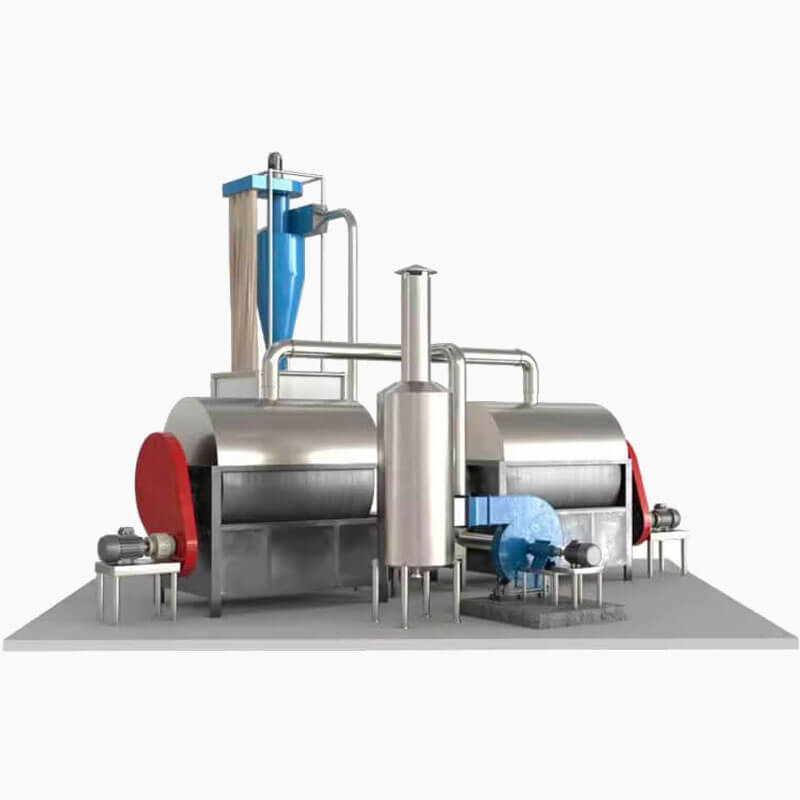
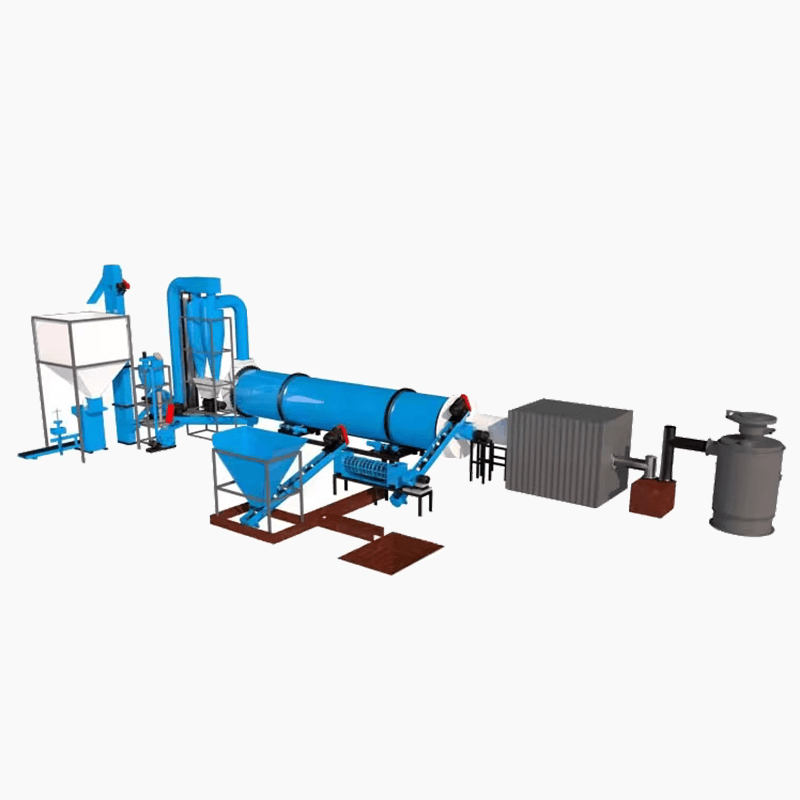
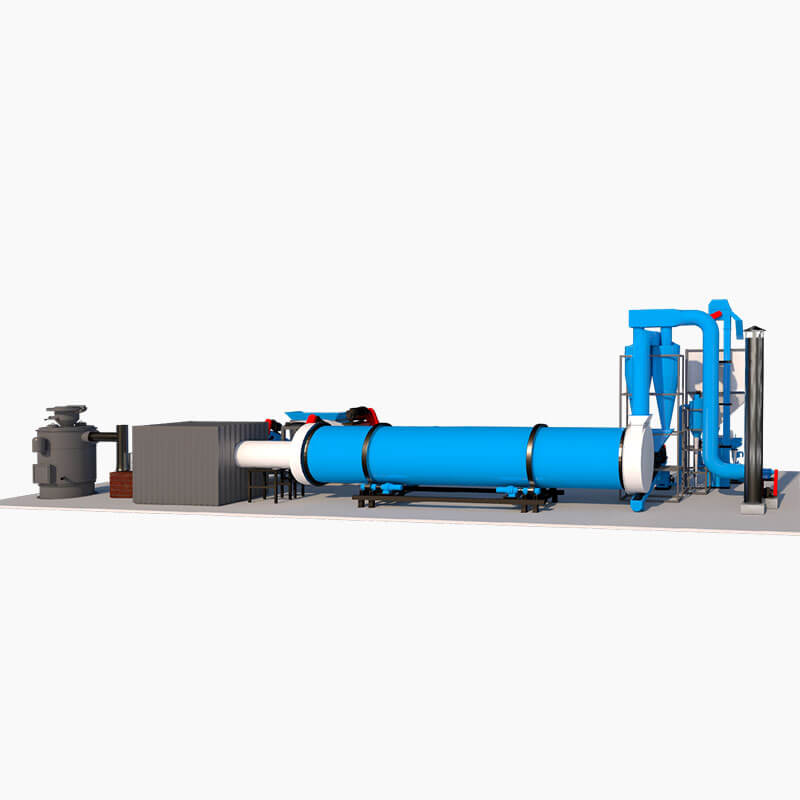
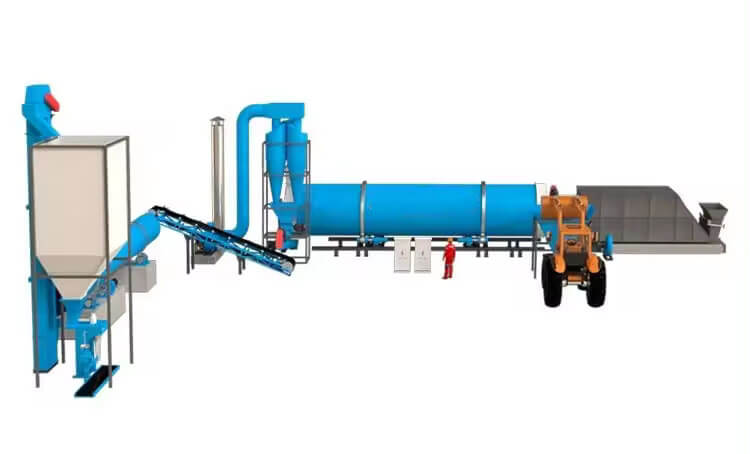
Complete Equipment Composition of Bean Dregs Dryer
1. Okara Special Anti-Stick Rotary Drum (Core Structure)
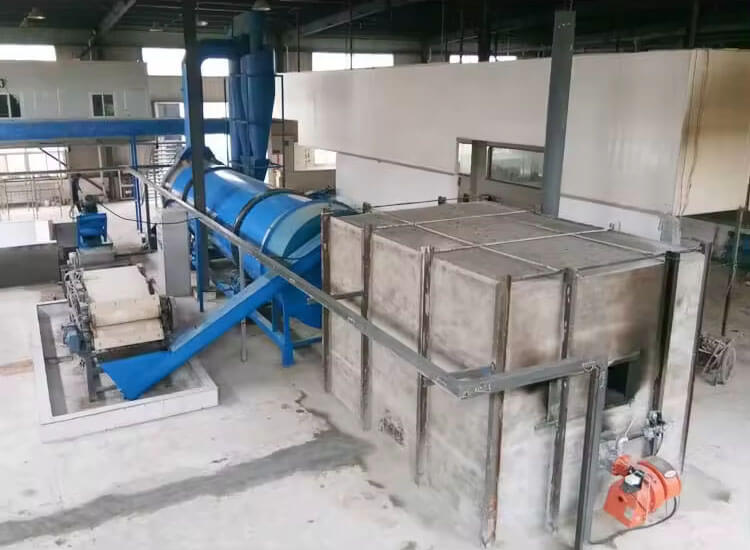
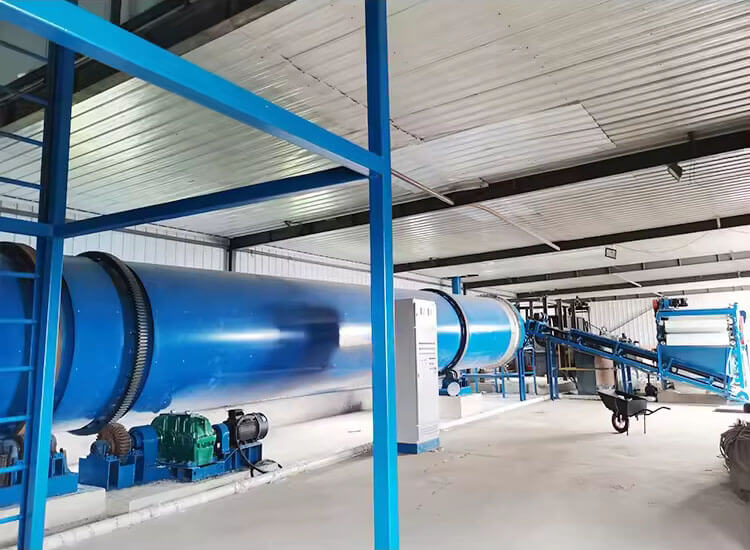
The drum is professionally optimized for high-viscosity fine bean dregs, equipped with multi-angle combined anti-adhesion lifting plates and auxiliary dispersion devices. Different from ordinary drying drums, it can actively disperse agglomerated okara during rotation, prevent fine materials from sticking to the drum wall and bottom, and eliminate dead drying zones. The thickened wear-resistant drum body adapts to long-term continuous processing of sticky fine residues, ensuring stable heat exchange and uniform drying.
2. Low-Temp Nutrient-Preserving Heating System
Adopts staged low-temperature gradual drying mode, including pre-drying dispersion, constant-temperature deep dehydration and cooling shaping. The working temperature is precisely controlled to avoid high-temperature protein denaturation and nutrient loss, retaining the original active protein and fiber activity of bean dregs. It supports multiple clean heat sources such as natural gas, biomass, diesel and hot air, adapting to different factory energy configurations and production standards.
3. Anti-Caking Variable-Speed Feeding Device
Customized anti-bridging screw feeding equipment for stacked and agglomerated wet bean dregs. It realizes variable-speed quantitative feeding, preliminarily breaks large okara clusters, and spreads materials evenly into the drum. It effectively solves uneven drying caused by material accumulation and blockage, ensuring consistent drying quality of each batch of bean dregs.
4. Negative Pressure Dust Purification & Recovery System
Aiming at fine powder generated during bean dregs drying, the whole machine adopts fully sealed micro negative pressure operation. It effectively controls dust overflow and floating fine materials, collects scattered okara powder completely, avoids material waste, and meets international environmental protection emission standards. It improves finished product yield while ensuring a clean workshop environment.
5. Intelligent Constant-Humidity PLC Control System
The intelligent system automatically adjusts drum rotating speed, hot air temperature and air volume according to the viscosity, thickness and inlet moisture of bean dregs. It matches low-speed gentle operation for high-viscosity materials, with over-temperature protection, fault alarm and automatic shutdown functions. It realizes 24-hour unmanned stable operation and ensures standardized batch production.
Core Product Advantages of Bean Dregs Dryer
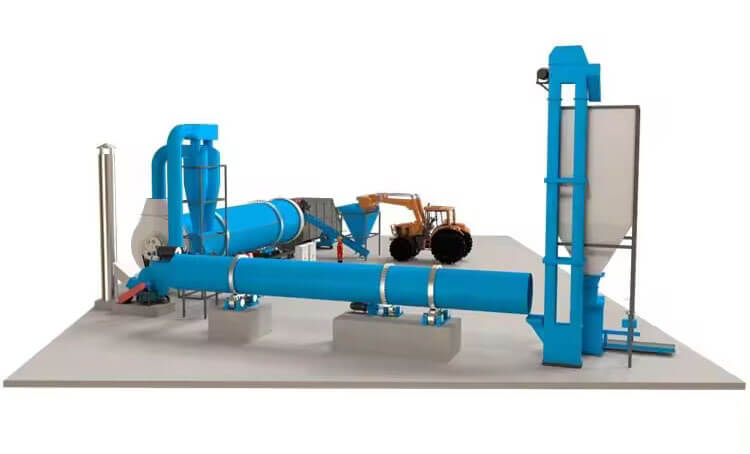
1. Professional Anti-Stick & Anti-Caking Design
Targeted at the strong viscosity and easy-caking characteristics of wet bean dregs, the unique combined lifting and dispersion structure continuously loosens and scatters materials during operation. It completely solves the industry pain points of wall sticking, material pasting and frequent shutdown cleaning of traditional dryers, greatly improving continuous production efficiency and reducing manual maintenance costs.
2. Low-Temp Drying, Maximize Protein Retention
Staged low-temperature gradual drying avoids high-temperature damage to active nutrients of okara. It effectively retains 98% of the original protein and dietary fiber activity of bean dregs, without protein denaturation, discoloration or peculiar smell. The finished okara meets high-standard animal feed processing requirements, greatly improving product added value and market competitiveness.
3. Uniform Dehydration & Long Storage Life
After pre-dispersion and layered uniform heat exchange, wet bean dregs realize thorough step-by-step dehydration with no internal wet core. The finished moisture is stably controlled at 12%-15% adjustable range. No secondary mildew, agglomeration, bacterial growth or deterioration occurs during long-term storage and transportation, solving the problem of easy spoilage of fresh okara.
4. High Yield & Zero Material Waste
The fully sealed anti-leakage structure and dust recovery system completely collect fine okara powder and scattered materials. Compared with ordinary dryers, the finished product yield is increased by 10%-15%, maximizing the utilization rate of waste soybean residues and realizing full resource recycling.
5. Wide Versatility & Diversified Output
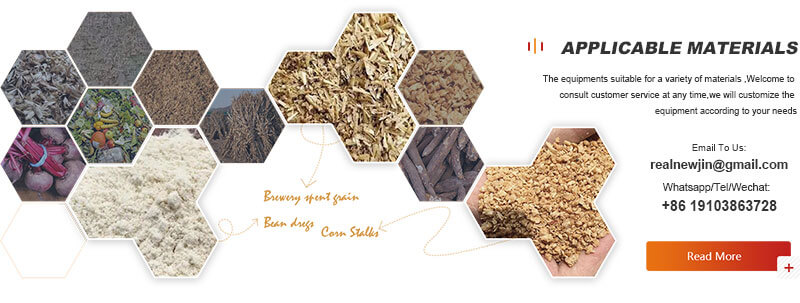
This equipment is not only suitable for all types of soybean bean dregs, but also adaptable to rice residue, corn residue, peanut residue and other high-viscosity grain residues. The dried okara can be used for livestock feed, aquaculture feed, organic fertilizer raw materials and biomass fuel, with diversified profit channels for processing enterprises.
6. Energy-Saving & Stable Continuous Production
The optimized circulating heat exchange structure reduces heat loss and improves thermal utilization rate, with 30%-35% higher energy efficiency than traditional high-temperature dryers. The industrial heavy-duty structure adapts to long-term high-load operation of sticky fine materials, with low failure rate and simple daily maintenance, supporting 24-hour uninterrupted batch production.
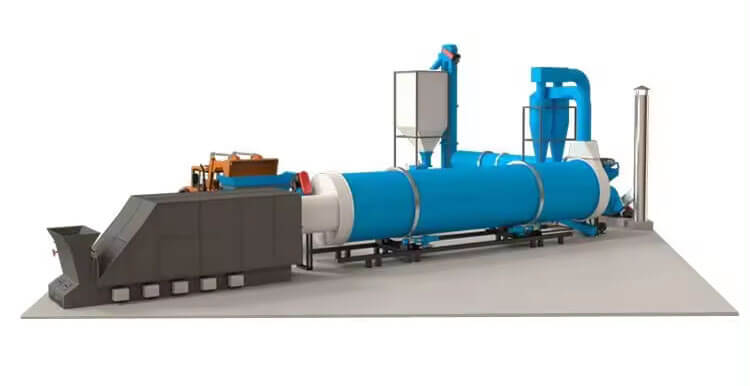
Working Principle & Production Process of Bean Dregs Dryer
Working Principle
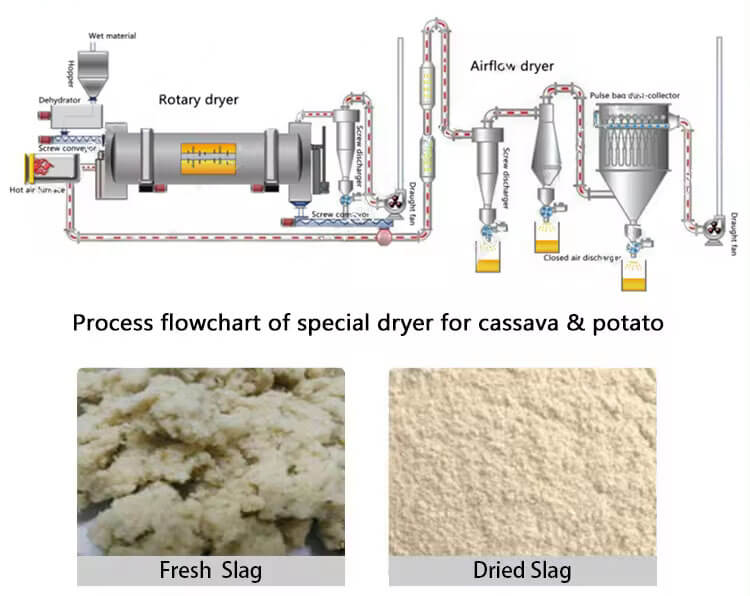
The bean dregs dryer adopts anti-stick low-temperature staged drying principle tailored for high-viscosity high-protein okara. Fresh wet bean dregs with 55%-60% moisture are quantitatively and evenly sent into the drum through the anti-caking variable-speed feeding device. The special dispersion lifting plates gently flip and scatter sticky okara clusters to avoid agglomeration and wall adhesion.
With the slow rotation of the drum, materials pass through the pre-drying zone, deep dehydration zone and cooling shaping zone in sequence. The graded low-temperature hot air evaporates surface and internal moisture step by step, which fully removes water content without damaging bean dregs protein and nutrients. The sealed dust recovery system collects fine powder, and dry, loose, high-nutrient and non-perishable okara is discharged to complete high-quality drying processing.
Standard Production Flow
Wet Bean Dregs Feeding → Anti-Caking Dispersion Conveying → Low-Temp Pre-Drying → Constant-Temp Deep Dehydration → Anti-Stick Scattering & Purification → Cooling Shaping → Dry Okara Discharging → Animal Feed Processing / Organic Fertilizer / Biomass Fuel Production
Application Scenarios of Bean Dregs Dryer
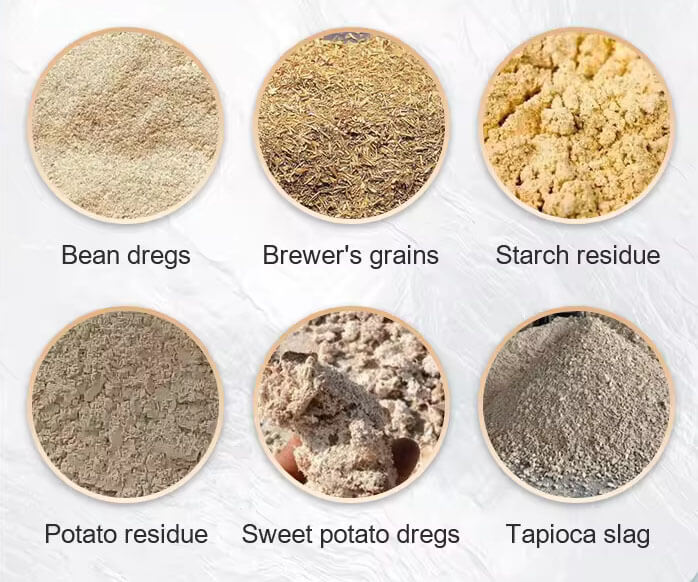
This professional bean dregs dryer is specially developed for resource recycling of soybean processing residues. It solves the problems of fresh okara spoilage, environmental pollution and low utilization rate. The dried high-protein bean dregs are widely used in pig, cattle, sheep and poultry livestock feed, aquaculture feed, agricultural organic fertilizer raw materials and biomass fuel production. It helps soybean product processing factories realize waste recycling, reduce environmental pressure and create additional economic benefits.
Core Application Fields: Okara animal feed production, soybean residue resource utilization, agricultural organic fertilizer processing, biomass fuel raw material production, food factory waste recycling projects
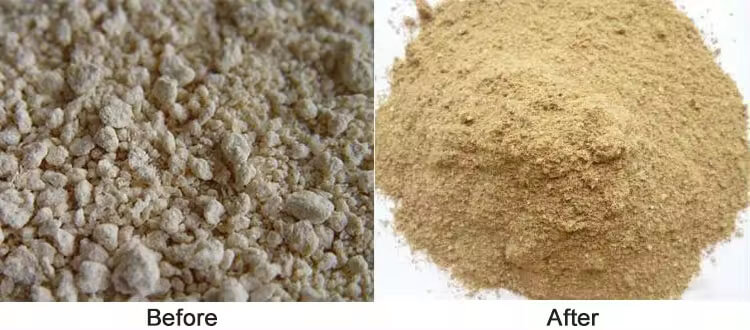
Real Project Cases of Bean Dregs Dryer
Case 1: 10T/H Feed-Grade Bean Dregs Drying Project | Vietnam Soybean Processing Factory
Project Info: The customer is a large tofu and soybean milk processing enterprise with a large amount of daily waste okara. Traditional drying causes serious sticking, material deterioration and protein loss. Our anti-stick low-temperature dryer stably controls finished moisture at 13%, retains complete protein activity, and produces high-quality feed-grade bean dregs. The finished products are sold to local livestock farms with stable profits.
Case 2: 7T/H Multi-Purpose Okara Drying Project | Thailand Agricultural Recycling Plant
Project Info: The customer needs to process bean dregs for both feed and fertilizer production. Traditional equipment cannot balance drying quality and efficiency. Our versatile bean dregs dryer realizes adjustable moisture control, meets dual production standards, and runs stably for 24 hours with low energy consumption. It greatly improves resource utilization flexibility and economic benefits.
Case 3: 12T/H High-Efficiency Okara Drying Line | Malaysia Food Waste Recycling Enterprise
Project Info: The customer undertakes centralized recycling of local soybean processing residues, requiring large-scale continuous production. Our industrial bean dregs dryer features anti-stick and high-yield design, no frequent shutdown cleaning, and stable batch drying quality. The dried okara is uniformly supplied to local feed factories, forming a complete circular economy industrial chain.
Parameters of Bean Dregs Dryer
| Specification | Input Capacity(t/d) | Output(t/d) | Raw Material Moisture(%) | Dried Material Moisture(%) | Total Power(kw) | Area |
| NJZG1208 | 43.7 | 25.7 | <83% | 10% (adjustable) | 55 | 5m*20m |
| NJZG1408 | 52.5 | 30.9 | 75 | 5m*20m | ||
| NJZG1610 | 75.8 | 44.6 | 95 | 6m*22m | ||
| NJZG2010/3 | 169.0 | 99.4 | 140 | 8m*25m | ||
| NJZG2210/3 | 186.5 | 109.7 | 170 | 8m*25m | ||
| NJZG2510/3 | 215.5 | 126.7 | 210 | 10m*28m | ||
| NJZG2512/3 | 262.2 | 154.2 | 260 | 10m*30m | ||
| NJZG2912/3 | 317.6 | 186.8 | 300 | 10m*30m |
Get Custom Bean Dregs Drying Solution
Our professional bean dregs dryer is tailor-made for high-viscosity high-protein okara, solving the industry pain points of material sticking, caking, nutrient loss and easy deterioration of traditional drying equipment. With core advantages of anti-stick design, low-temperature protein preservation, energy saving and high yield, it helps global soybean processing and agricultural recycling enterprises turn waste okara into high-value feed and fertilizer products, realizing sustainable circular economic benefits.
Contact us now to get free equipment quotation, customized model selection and professional bean dregs drying project solution!
FAQs of Bean Dregs Dryer
Q1: What is the difference between Bean Dregs Dryer and Coconut Slag Dryer?
A: Bean dregs dryer targets high-protein, fine and ultra-sticky soybean residues, focusing on protein retention and anti-caking. Coconut slag dryer is for high-oil coconut by-products, focusing on anti-rancidity and grease protection. Their internal flipping structure and temperature control logic are completely different for different material characteristics.
Q2: Why can’t bean dregs adopt high-temperature drying?
A: Fresh bean dregs are rich in active protein. High-temperature drying will cause protein denaturation, nutrient loss, material scorching and peculiar smell, making it unqualified for feed use. Low-temperature staged drying ensures maximum nutrient retention and high-quality finished products.
Q3: How to solve bean dregs sticking and caking during drying?
A: Our equipment is equipped with exclusive anti-stick drum structure and pre-dispersion feeding device. It actively breaks okara clusters and prevents wall adhesion during operation, fundamentally solving the sticky and caking problems of traditional dryers without frequent manual cleaning.
Q4: What is the standard moisture for dried bean dregs?
A: For commercial animal feed processing, the optimal moisture content of dried bean dregs is 12%-15%. This range ensures no mildew, no deterioration during long-term storage, and maintains the best nutritional activity and palatability.
Q5: Can this dryer process other grain residues?
A: Yes. It has strong versatility, adapting to bean dregs, rice dregs, corn dregs, peanut dregs and other high-viscosity grain residues, meeting diversified waste residue drying and resource utilization needs.