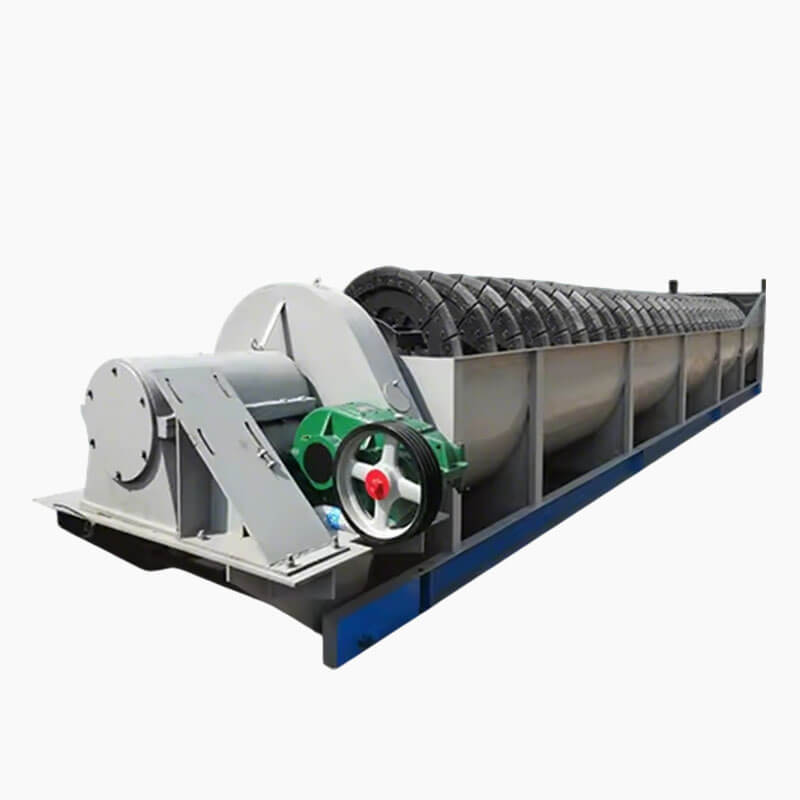
Spiral Classifier
High Precision Mining Spiral Classifier for Ball Mill Closed Circuit Ore Grinding & Particle Classification
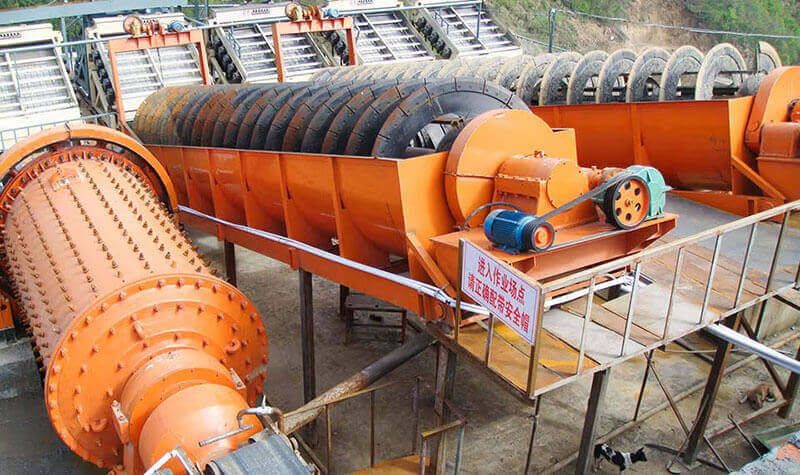
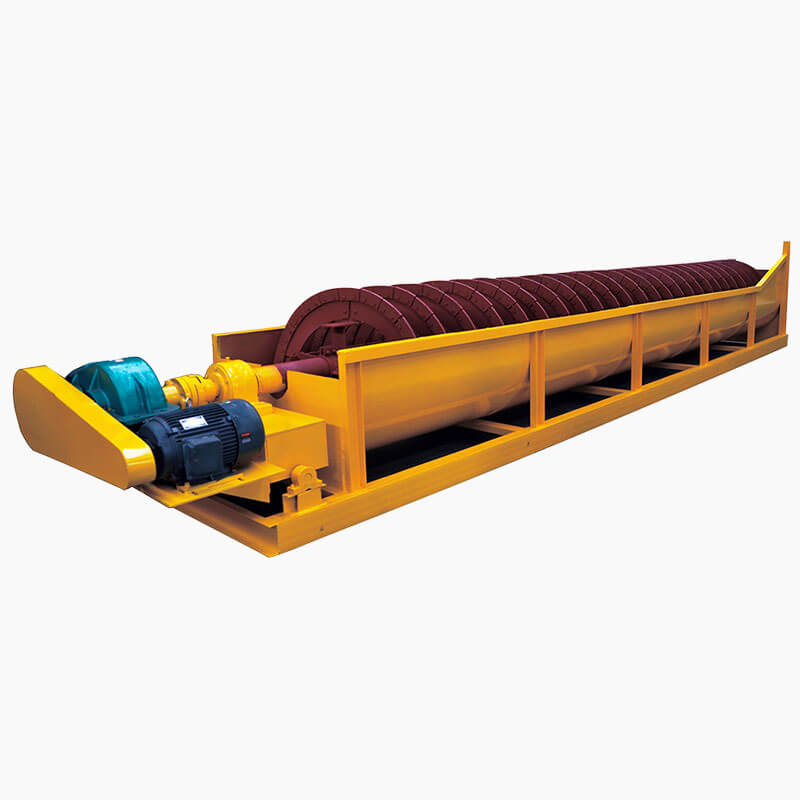
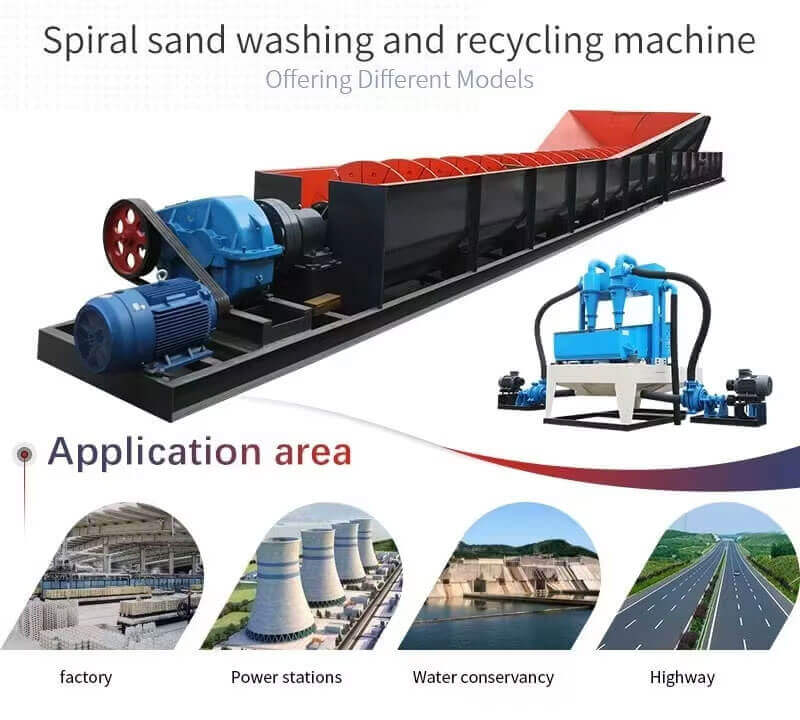
Spiral Classifier is a professional hydraulic mineral grading and dewatering equipment widely matched with ball mills. Adopting gravity sedimentation particle classification principle, it separates coarse and fine ore particles, removes fine mud and impurities, and returns coarse sand back to the ball mill for re-grinding. Featuring high grading accuracy, stable operation and simple maintenance, it is essential core equipment for closed-circuit grinding systems in mineral processing plants.
Reliable Lifting
Returning Mechanism
Effective Desliming
What is Spiral Classifier?
In traditional ore grinding production, ball mills directly discharge mixed ore slurry with uneven particle sizes. A large number of unqualified coarse particles and fine mud impurities are mixed in finished ore, resulting in low subsequent beneficiation accuracy and unstable product quality. Open-circuit grinding also causes low grinding efficiency, serious over-grinding phenomenon and wasted grinding capacity, greatly reducing plant output and economic benefits.
Our Mining Spiral Classifier perfectly solves the above industry pain points. It forms a complete closed-circuit grinding system with ball mills, accurately classifying ore particles by different sedimentation speeds. Qualified fine-grained ore overflows for next-process beneficiation, while unqualified coarse sand is lifted and returned to the ball mill for re-grinding. It also realizes efficient dewatering and desliming, effectively improving ore quality and grinding efficiency, and optimizing the overall beneficiation process.
Contents
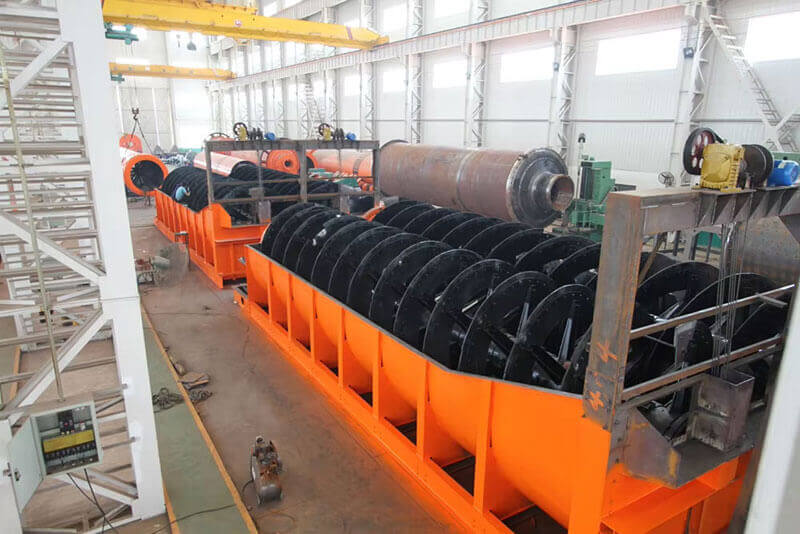
Core Structural Composition & Functional Advantages of Spiral Classifier
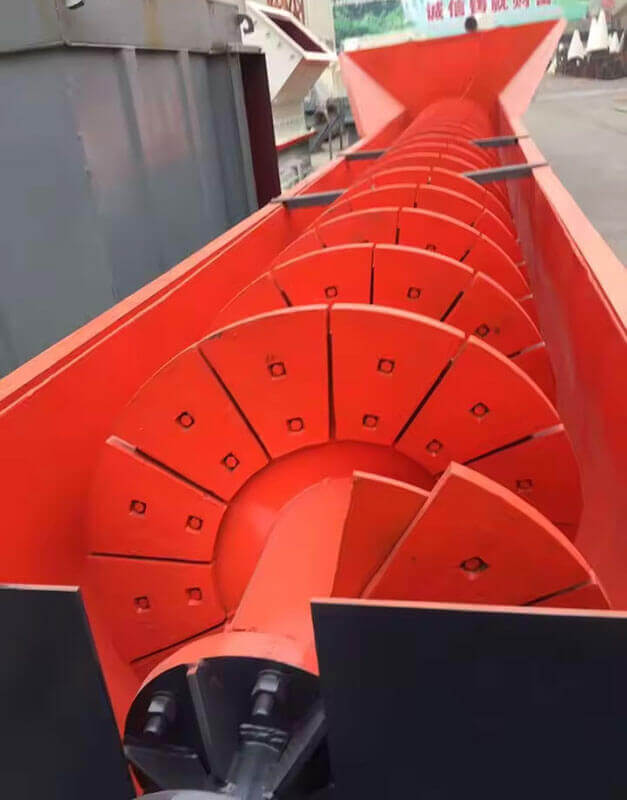
1. High-Precision Wear-Resistant Spiral Blade
Adopts thickened wear-resistant spiral blades with optimized pitch and rotation radius. The surface is treated with anti-wear coating to resist long-term ore slurry scouring and particle impact. Uniform spiral rotation ensures stable coarse sand lifting speed and accurate particle classification, avoiding material accumulation and grading deviation.
2. Large-Capacity Sedimentation Tank Body
The streamlined tank body design expands the effective sedimentation area, providing sufficient sorting space for ore particles. It effectively improves fine particle overflow efficiency and prevents coarse particle mixing into finished ore. The overall welding structure is firm and durable, with strong bearing capacity and stable water level control.
3. Adjustable Speed Drive System
Equipped with high-efficiency reducer and variable frequency motor, supporting stepless adjustment of spiral rotation speed. Users can adjust grading fineness and processing capacity according to ore hardness, particle size and production requirements, flexibly adapting to different mineral grinding standards.
4. Reliable Lifting & Returning Mechanism
The central spiral shaft adopts thickened solid structure with strong torsion resistance and stable operation. It can continuously and evenly lift bottom coarse sand without slipping or material blocking, ensuring stable cyclic grinding of the closed-circuit system and improving overall production continuity.
5. Effective Desliming & Dewatering Function
The unique water level overflow design effectively separates fine mud and light impurities in the ore slurry, reducing mud content in finished ore. The spiral lifting process realizes natural dewatering of coarse sand, reducing slurry moisture and improving ball mill grinding efficiency.
6. Simple Structure & Low Maintenance
The whole machine has a compact mechanical structure with few vulnerable parts and no complex hydraulic or pneumatic system. It is easy to install, debug and maintain, with low failure rate and long continuous operation cycle, greatly reducing daily operation and maintenance costs.
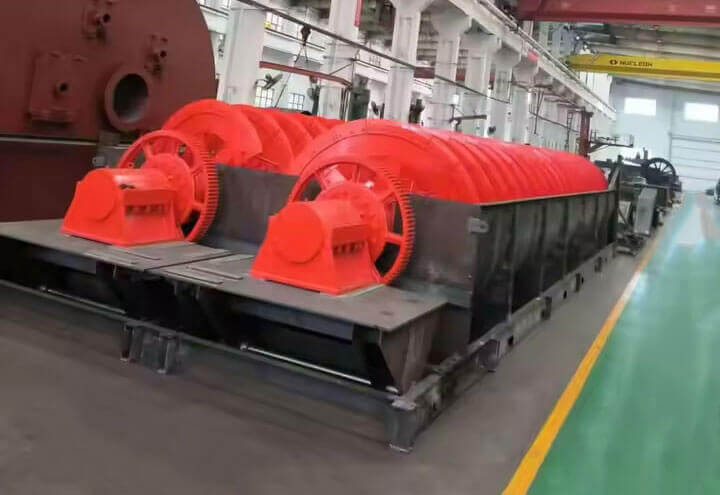
Core Product Advantages of Spiral Classifier
1. High Grading Accuracy & Uniform Particle Size
Precise gravity sedimentation grading technology effectively separates coarse and fine ore particles, thoroughly solving the problem of uneven particle size in open-circuit grinding. The finished overflow ore has uniform fineness and low coarse particle content, providing high-quality raw materials for subsequent flotation, magnetic separation and gravity separation processes.
2. Improve Ball Mill Grinding Efficiency & Output
The closed-circuit cyclic grinding mode avoids over-grinding and under-grinding phenomena. Unqualified coarse sand is returned for reprocessing, maximizing grinding utilization rate. Compared with open-circuit production, it increases mill output by 15%-25% and greatly reduces unit grinding energy consumption.
3. Efficient Desliming & Impurity Removal
It effectively removes fine mud, dust and light gangue impurities in ore slurry, reduces mud interference in subsequent beneficiation processes, improves concentrate grade and mineral recovery rate, and optimizes the overall beneficiation technical indicators of the plant.
4. Stable Operation & Strong Adaptability
It can adapt to various metal and non-metal ores such as gold, iron, copper, tin, tungsten and fluorite. It operates stably under large fluctuations of ore feeding volume and slurry concentration, with strong on-site adaptability and wide application range.
5. Low Energy Consumption & Cost-Effective
The optimized transmission structure reduces invalid power consumption. Simple maintenance and few vulnerable parts save long-term operating costs. The closed-circuit grinding system improves resource utilization rate and creates higher economic benefits for mines with low investment.
6. Mature Closed-Circuit Supporting Solution
It is a standard supporting equipment for ball mills, perfectly matching all types of grinding equipment to form a complete grinding and grading production line. It is convenient for production line transformation and new project layout, with high industry recognition and stable performance.
Working Principle & Production Flow of Spiral Classifier
Core Working Principle
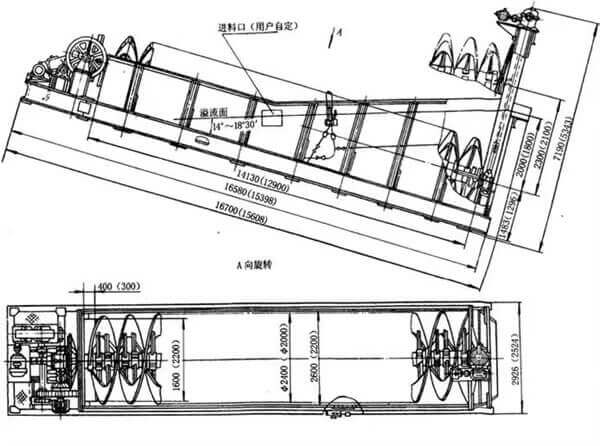
The Spiral Classifier relies on the difference in mineral particle sedimentation velocity in water. After the ore slurry enters the tank, fine and light particles settle slowly and overflow from the upper water level as qualified fine ore. Coarse and heavy particles settle rapidly to the tank bottom. The rotating spiral blade continuously lifts coarse sand upward and discharges it from the return port, sending it back to the ball mill for secondary grinding. Realize automatic cyclic grading, desliming and dewatering of ore particles.
Standard Closed-Circuit Process Flow
Ball Mill Ore Discharging → Slurry Feeding to Spiral Classifier → Gravity Sedimentation Classification → Fine Ore Overflow Discharge (Next Beneficiation) → Coarse Sand Spiral Lifting & Returning → Secondary Ball Mill Grinding (Cyclic Operation)
Application Scenarios of Spiral Classifier
Main Application Fields
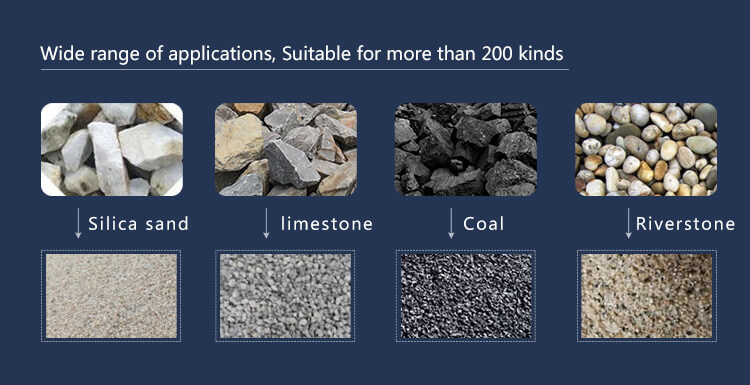
Spiral Classifier is widely used in mineral processing, building materials, chemical industry and sand aggregate industries. It is the core supporting equipment for ball mill closed-circuit grinding systems, mainly used for ore particle classification, fine mud removal, slurry dewatering and tailings sand separation. It is suitable for pre-grading and check grading of various metal and non-metal ores, and can also be used for washing and grading artificial sand and natural river sand.
Common Matching Production Lines
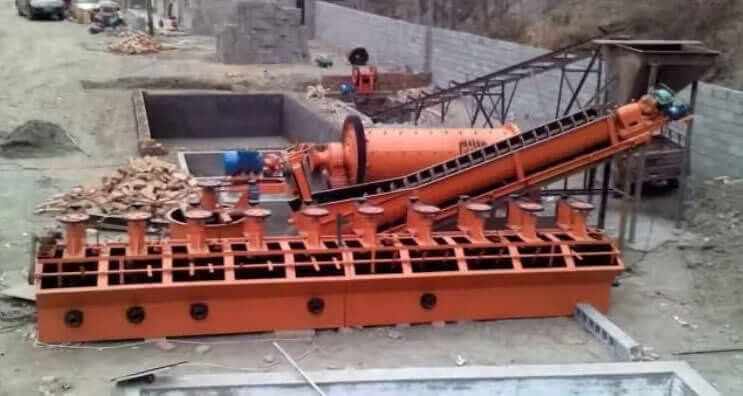
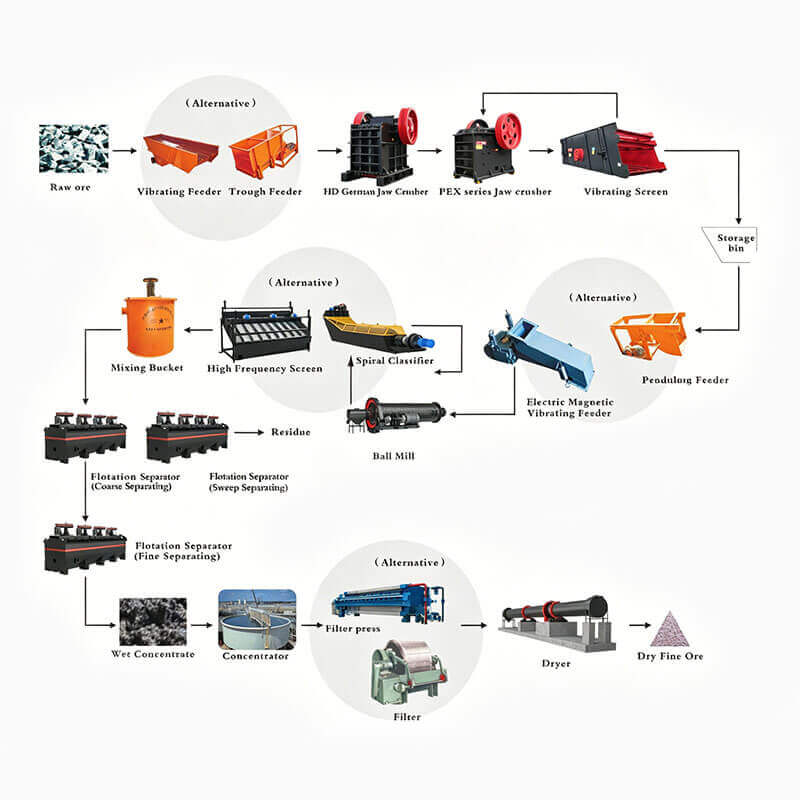
Ore Crushing → Ball Mill Grinding → Spiral Classifier Grading → Fine Ore Overflow Beneficiation → Coarse Sand Return Re-Grinding / Tailings Dewatering & Discharge
Global Project Cases of Spiral Classifier
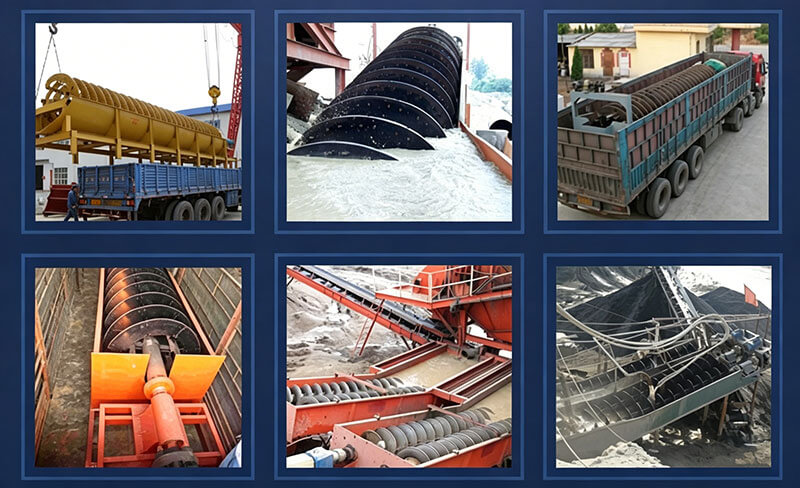
Case 1: Gold Ore Closed-Circuit Grinding Project | Ghana Mineral Plant
Project Info: The customer’s original open-circuit ball mill grinding had uneven particle size and low grinding efficiency. After matching our FG series spiral classifier, a complete closed-circuit grinding system is formed. Unqualified coarse gold ore is returned for re-grinding, fine mud impurities are effectively removed, finished ore particle size is uniform and stable, and subsequent gold recovery rate is significantly improved.
Case 2: Copper Ore Grinding & Grading Project | Tanzania Processing Plant
Project Info: Copper ore has high mud content and complex particle size distribution. Our spiral classifier realizes precise particle classification and efficient desliming, solving the problem of mud interference affecting flotation index. The stable cyclic grinding operation improves ball mill output by 20%, reduces unit energy consumption, and greatly improves plant production profit.
Case 3: Fluorite Ore Fine Grinding Project | Vietnam Beneficiation Factory
Project Info: Fluorite ore requires high grinding fineness. The spiral classifier accurately controls overflow particle size to ensure qualified fine ore enters flotation process. Coarse particles are recycled for repeated grinding to avoid material waste. The equipment runs stably for a long time with low failure rate, meeting the long-term high-efficiency production demand of the plant.
FAQs of Spiral Classifier
Q1: What is a spiral classifier used for?
A: Spiral classifier is professional mineral grading and dewatering equipment, mainly matched with ball mills to form closed-circuit grinding systems. It classifies coarse and fine ore particles, removes fine mud, and returns coarse sand for re-grinding to improve grinding quality and efficiency.
Q2: What is the difference between spiral classifier and spiral chute?
A: Spiral classifier is for particle grading & closed-circuit grinding support, sorting by sedimentation speed; spiral chute is for gravity mineral separation, separating valuable minerals from gangue by density. The two have completely different functions and application links.
Q3: What minerals can spiral classifier process?
A: It is suitable for gold, copper, iron, tin, tungsten, fluorite, hematite and other metal and non-metal ores, as well as artificial sand and natural river sand grading and washing operations.
Q4: How to adjust the grading fineness?
A: The ore particle fineness can be adjusted by changing spiral rotation speed, adjusting water level height and controlling feeding volume, which is flexible and convenient to meet different grinding fineness standards.
Q5: Is the spiral classifier easy to maintain?
A: Yes. Simple mechanical structure with few vulnerable parts. Only regular cleaning of tank sediment and inspection of spiral blades is required, with low daily maintenance difficulty and low operating cost.
Technical Parameters of Spiral Classifier
| Model | Diameter(mm) | Speed of Screw(r/min) | Slope(°) | Capacity | Weight(t) | |
| Overflow (t/d) | Returned Sand(t/d) | |||||
| FLG-5 | 500 | 8.5-15.5 | 14-18 | 32 | 143-261 | 1.6 |
| FLG-7 | 750 | 4.5-9.9 | 14-18 | 65 | 256-564 | 2.9 |
| FLG-10 | 1000 | 3.5-7.6 | 14-18 | 85 | 473-1026 | 4.4 |
| FLG-12 | 1200 | 6 | 14-18 | 155 | 1170-1600 | 9.4 |
| FLG-15 | 1500 | 2.5-6 | 14-18 | 235 | 1140-2740 | 11.7 |
| FLG-20 | 2000 | 3.6-5.5 | 14-18 | 400 | 3890-5940 | 21.5 |
| FLG-24 | 2400 | 3-5 | 14-18 | 580 | 6800 | 33.5 |
| FLG-30 | 3000 | 2-4 | 14-18 | 890 | 11650 | 37 |
| 2FLG-12 | 1200 | 6 | 14-18 | 310 | 2340-3200 | 15.8 |
| 2FLG-15 | 1500 | 2.5-6 | 14-18 | 470 | 2800-5480 | 22.1 |
| 2FLG-20 | 2000 | 3.6-5.5 | 14-18 | 800 | 7780-11880 | 36.4 |
| 2FLG-24 | 2400 | 3.67 | 14-18 | 1160 | 13600 | 45.9 |
| 2FLG-30 | 3000 | 3.2 | 14-18 | 1785 | 23300 | 73 |
Get Custom Spiral Classifier Solution
Our Spiral Classifier solves the pain points of uneven particle size, low efficiency and serious material waste in open-circuit grinding. With high grading accuracy, stable operation and energy-saving advantages, it perfectly matches ball mills to form efficient closed-circuit grinding systems, effectively improving ore quality, plant output and comprehensive beneficiation benefits for global mineral processing plants.
Contact us now for free model selection, process matching and accurate customized quotation!