Cement Rotary Kiln
High Efficiency Industrial Rotary Kiln for Dry-Process Cement Clinker Calcination Production Line
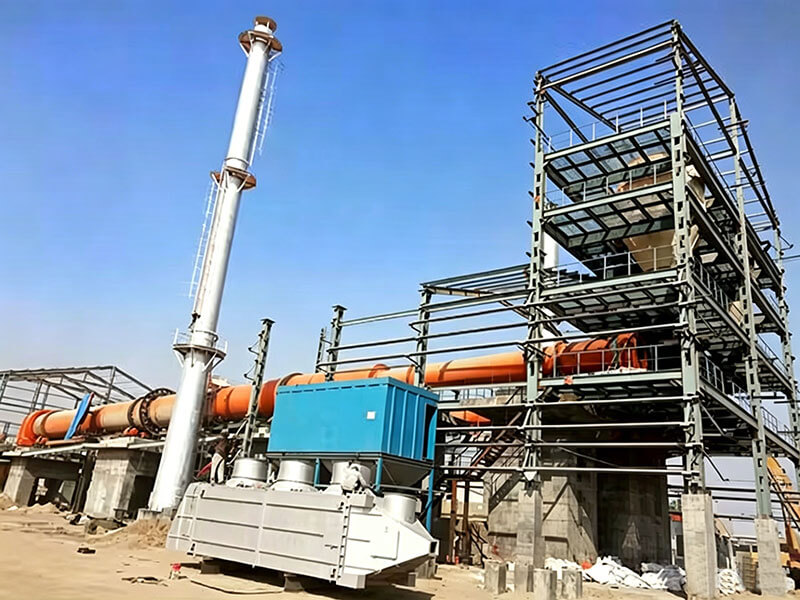
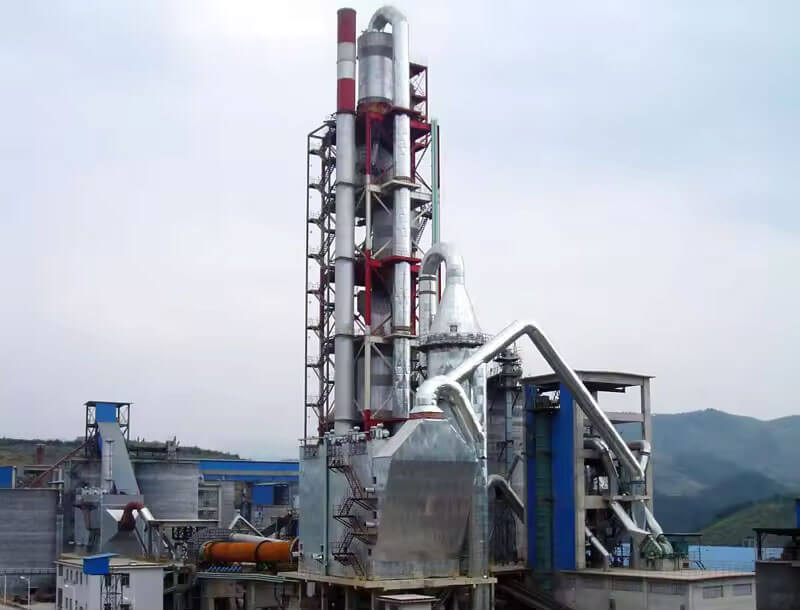
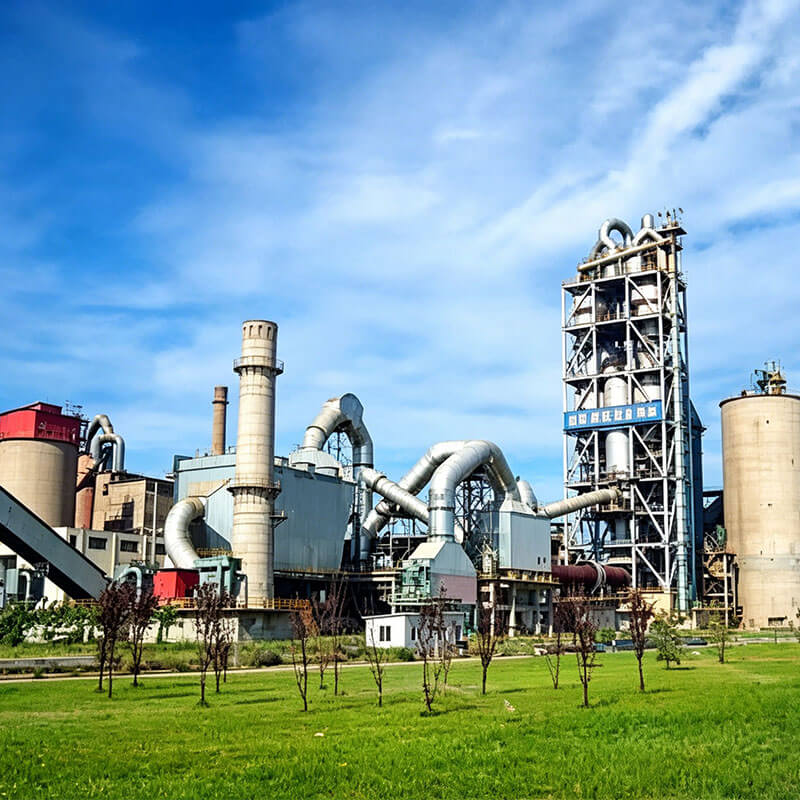
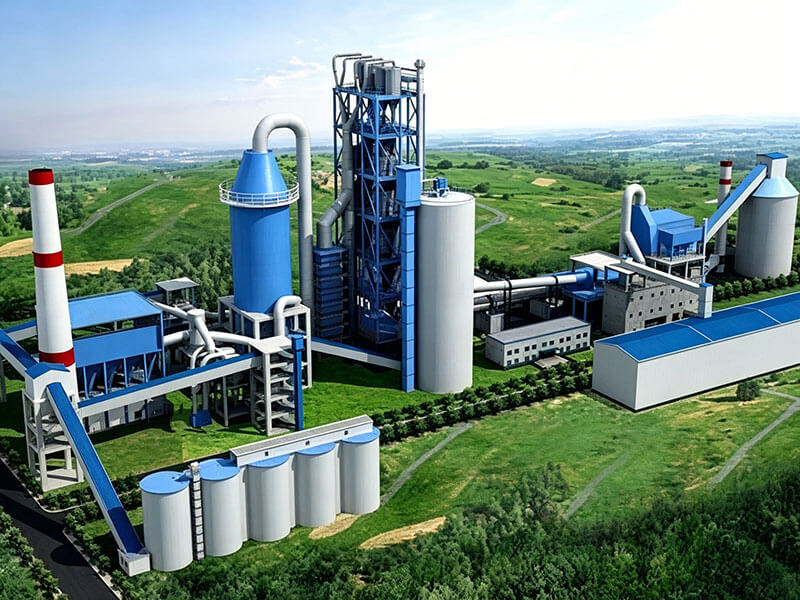
Cement Rotary Kiln is the core thermal processing equipment of modern dry-process cement plants, mainly used for high-temperature calcination of cement raw meal into qualified cement clinker. Adopting inclined rotary countercurrent heating technology, it completes raw material preheating, decomposition, high-temperature sintering and cooling in one continuous process. Featuring precise temperature control, energy-saving operation, stable clinker quality and large output, it is indispensable key equipment for cement manufacturing, metallurgy and chemical mineral roasting.
Stable Clinker
Energy Saving
Durable Structure
What is Cement Rotary Kiln?
Cement clinker calcination is the most critical link that determines cement finished product quality and plant production cost. Traditional old-fashioned rotary kilns have prominent defects such as uneven heating, large temperature fluctuation, high heat loss and serious energy consumption. Unstable sintering temperature easily leads to unqualified clinker strength, low finished cement stability and high production failure rate, which seriously restricts the economic benefits of cement plants.
Our High-efficiency Cement Rotary Kiln solves the above industry pain points with optimized structural design and intelligent temperature control system. The slightly inclined rotary cylinder drives raw materials to move slowly and uniformly, forming a complete countercurrent heat exchange with high-temperature flue gas. The whole calcination process is stable and controllable, ensuring full chemical reaction of raw materials. It effectively improves clinker activity and finished cement quality, reduces unit heat consumption, and realizes high-efficiency, energy-saving and stable continuous production of cement clinker.
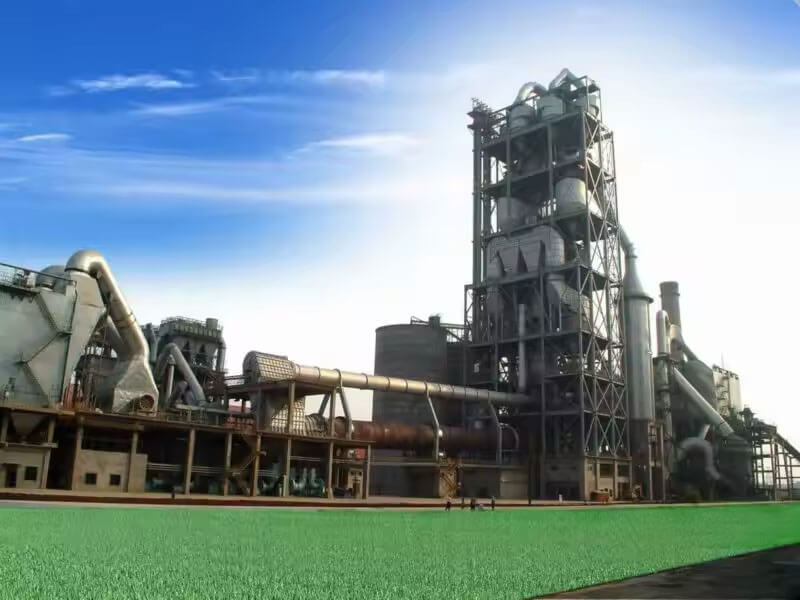
Core Structural Composition & Functional Advantages of Cement Rotary Kiln
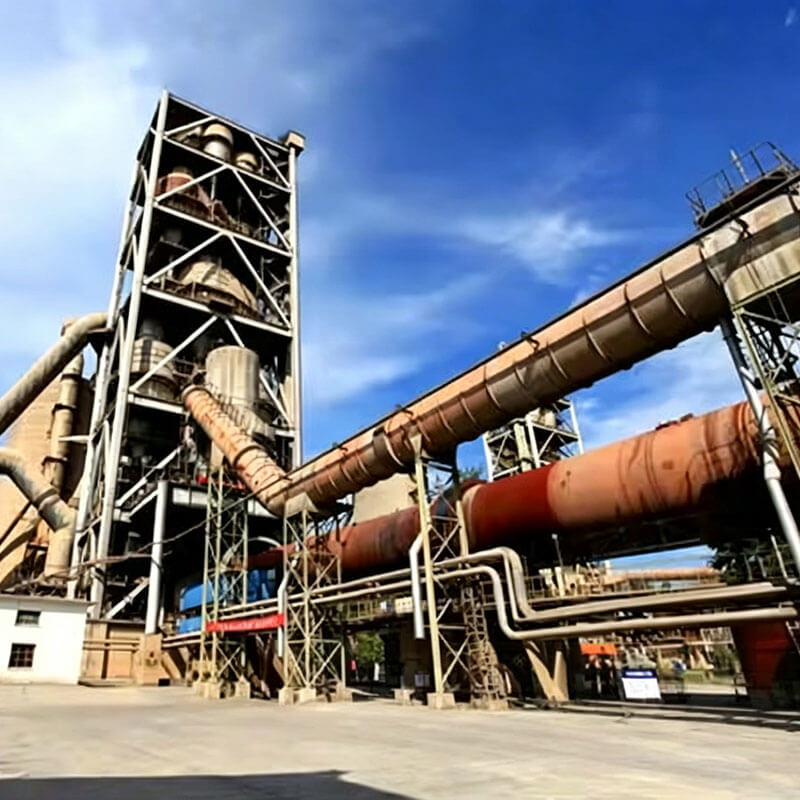
1. Thickened High-Strength Kiln Cylinder
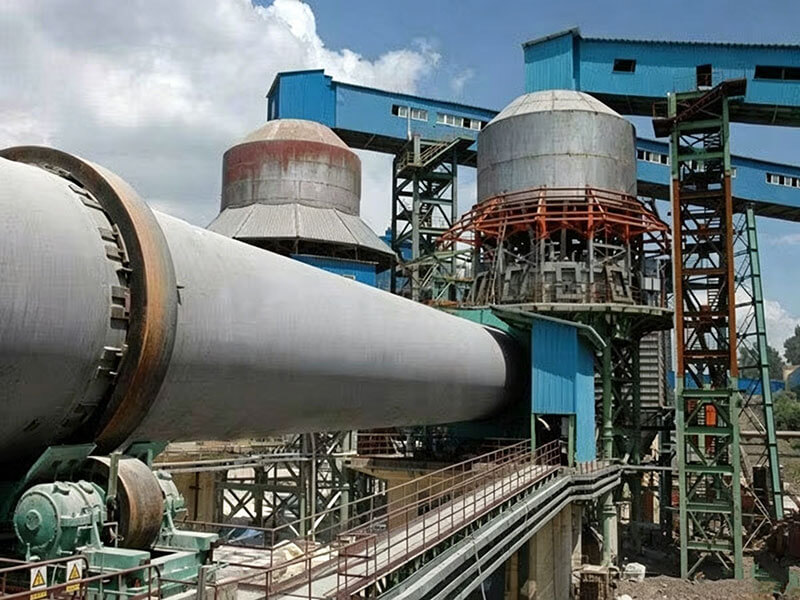
The kiln shell is made of high-quality thick steel plate through integral rolling and welding, with high structural rigidity and strong pressure resistance. It is not easy to deform under long-term high-temperature and high-load operation. The optimized cylinder curvature and inclination ensure uniform material movement speed and consistent calcination time, avoiding under-burning or over-burning of raw materials.
2. High-Temperature Resistant Refractory Lining
The inner wall of the kiln is paved with high-performance refractory bricks and heat insulation lining layers. It effectively isolates high temperature, reduces internal heat loss and protects the steel shell from high-temperature oxidation and corrosion. The durable refractory structure maintains stable internal temperature field for a long time, greatly improving thermal efficiency and extending the overall service life of the equipment.
3. Stable Support & Roller Riding System
Equipped with multi-group precision supporting rollers and hydraulic stop wheel devices, it bears the full weight of the rotary kiln stably. The roller surface is finely processed with low friction coefficient, ensuring smooth and uniform rotation of the cylinder without deviation or jitter. The automatic correction function effectively prevents axial displacement of the kiln body, realizing long-term stable operation.
4. Energy-Saving Intelligent Combustion System
Adopts multi-functional adjustable burner, supporting coal powder, natural gas, oil and multiple fuel combustion methods. The flame shape and combustion intensity can be adjusted freely according to production needs. Matching intelligent temperature control system, the internal kiln temperature is accurately controlled within ±7℃, ensuring sufficient fuel combustion and greatly reducing invalid energy consumption.
5. High-Tightness Sealing Device
Both kiln head and kiln tail adopt advanced multi-layer flexible sealing structure, which effectively isolates external cold air from entering and internal high-temperature flue gas leakage. It reduces heat loss and dust emission, stabilizes the internal thermal field and pressure field, improves calcination efficiency, and meets environmental protection emission standards.
6. Low-Failure Stable Transmission System
Equipped with high-torque reducer and variable frequency drive motor, the transmission power is sufficient and the operation is stable. The rotation speed can be adjusted steplessly to adapt to different raw material properties and production loads. The transmission structure is simple and durable, with low failure rate and convenient daily maintenance, ensuring long-term continuous operation of the production line.
Core Product Advantages of Cement Rotary Kiln
1. Precise Temperature Control & Stable Clinker Quality
The intelligent constant temperature system ensures uniform and stable high-temperature field inside the kiln, with small temperature fluctuation range. Raw materials are fully decomposed and sintered evenly, producing cement clinker with stable strength, high activity and uniform quality. It effectively avoids quality problems such as unqualified cement strength and poor stability caused by uneven calcination.
2. High Thermal Efficiency & Significant Energy Saving
Optimized countercurrent heat exchange structure and high-tightness sealing design greatly reduce heat loss and flue gas waste. The efficient combustion system improves fuel utilization rate, and the unit clinker heat consumption is significantly reduced compared with traditional kilns. It effectively cuts down long-term fuel and power costs for cement plants.
3. Large Production Capacity & High Operational Efficiency
The optimized cylinder rotation speed and material advancing speed realize continuous and efficient calcination cycle. It supports large-scale continuous production of dry-process cement lines, with high hourly output and strong overload capacity. It can adapt to long-term high-load operation and greatly improve the overall production efficiency of the cement plant.
4. Durable Structure & Long Service Life
Thickened steel shell + high-quality refractory lining + precision support system, the whole machine has strong high-temperature resistance, corrosion resistance and deformation resistance. The vulnerable parts have long replacement cycles, stable long-term operation performance, and greatly reduced equipment depreciation and maintenance costs.
5. Low Dust Emission & Green Environmental Protection
Advanced sealing and dust removal matching design effectively suppresses flue gas and dust leakage. The fuel burns fully with low harmful gas emission. It fully complies with international industrial environmental protection standards, helping cement plants solve environmental assessment and emission problems.
6. Wide Adaptability & Flexible Matching
It can be perfectly matched with various preheaters, decomposers and clinker coolers to form a complete dry-process cement production line. It is not only suitable for cement clinker production, but also widely used for high-temperature roasting of lime, bauxite, metallurgical ore and chemical raw materials, with strong industrial adaptability.
Working Principle & Complete Calcination Process of Cement Rotary Kiln
Core Working Principle
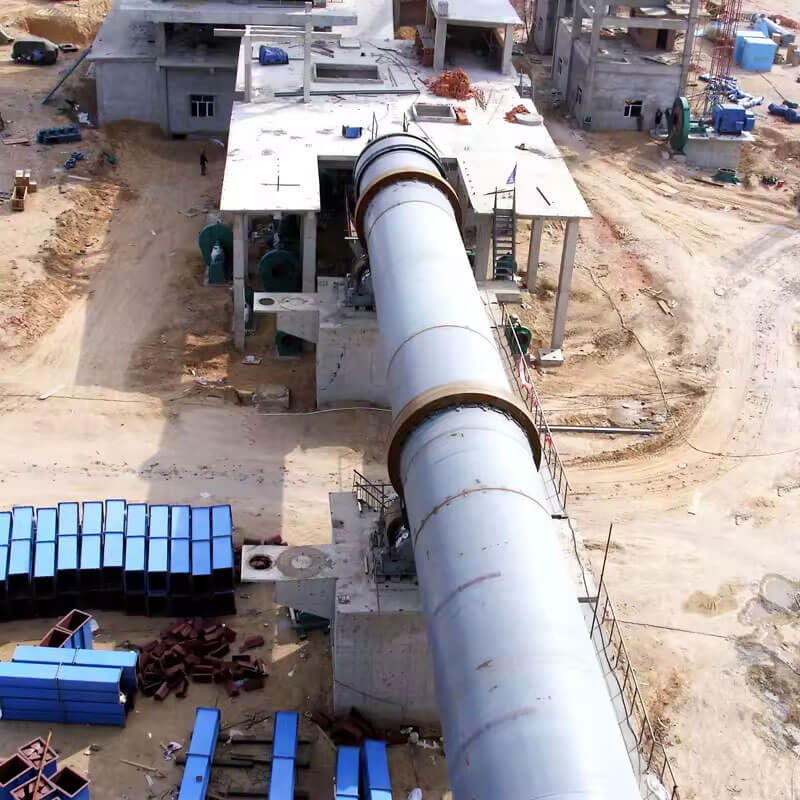
The cement rotary kiln adopts countercurrent thermal calcination principle. The steel cylinder is installed with a slight inclination of 1.5%-4% and rotates continuously at a low speed. Preheated cement raw meal enters from the elevated kiln tail, and fuel (coal powder, natural gas or diesel) is sprayed and burned from the kiln head to form high-temperature flame and hot flue gas. Under the dual action of cylinder rotation and inclination, materials slowly slide toward the kiln head, forming reverse flow with high-temperature flue gas.
During the slow advancing process, raw materials go through preheating, carbonate decomposition, high-temperature sintering and cooling crystallization in sequence. A series of physical and chemical reactions are completed inside the kiln to generate high-strength cement clinker. Finally, qualified clinker is discharged from the kiln head and sent to the cooler for subsequent processing, realizing fully automated continuous calcination production.
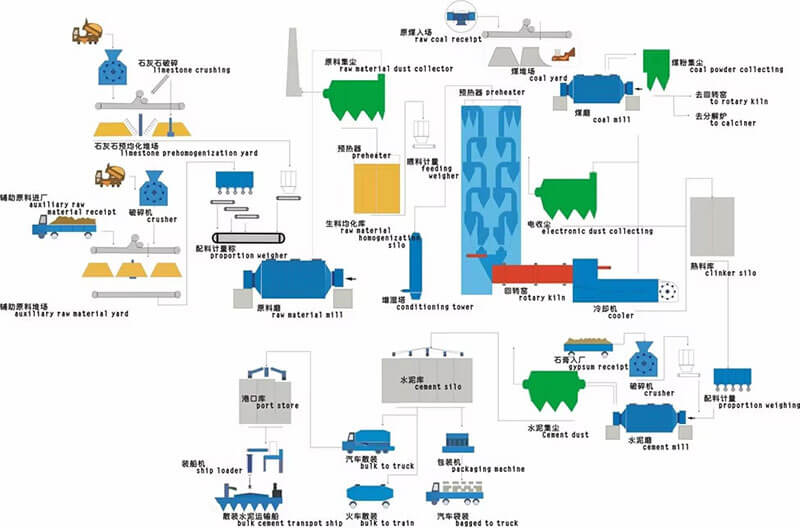
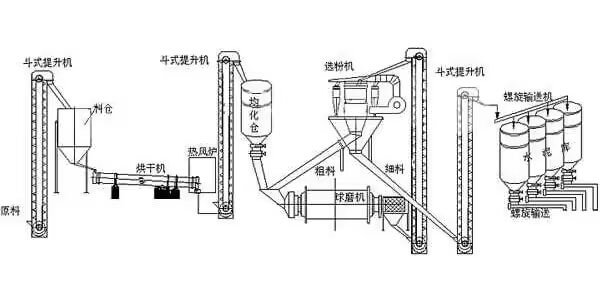
Standard Dry-Process Cement Production Flow
Raw Material Crushing & Grinding → Raw Meal Homogenization → Preheater Preheating & Pre-decomposition → Cement Rotary Kiln High-Temperature Calcination → Clinker Cooling → Cement Grinding & Finishing → Finished Cement Storage
Application Scenarios of Cement Rotary Kiln
Main Application Fields
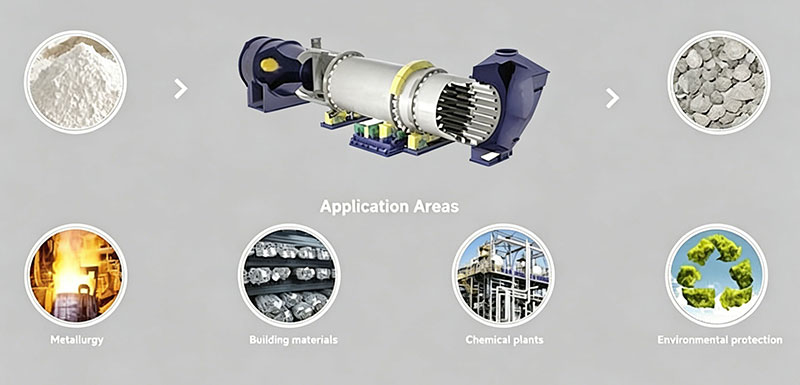
Cement Rotary Kiln is the core thermal processing equipment in building materials, metallurgy and chemical industries. It is mainly used for high-temperature calcination of cement clinker in dry-process cement production lines. In addition, it can also be used for active lime roasting, bauxite calcination, laterite nickel ore roasting and chemical raw material thermal treatment. It supports small, medium and large-scale industrial production projects and is widely recognized in global industrial manufacturing fields.
Classic Matching Production Line
Raw Material Crushing & Grinding → Raw Meal Mixing & Homogenizing → Cyclone Preheater Pre-decomposition → Cement Rotary Kiln High-Temperature Sintering → Clinker Cooler Rapid Cooling → Cement Finishing Grinding → Finished Product Storage & Packaging
FAQs of Cement Rotary Kiln
Q1: What is a cement rotary kiln used for?
A: Cement rotary kiln is the core calcination equipment of cement plants. It sinters preheated raw meal into high-strength cement clinker through high-temperature thermal reaction. It can also be used for lime, bauxite and other mineral roasting in metallurgical and chemical industries.
Q2: What is the working temperature of cement rotary kiln?
A: The internal calcination temperature is stably controlled at 1200-1450℃. The precise temperature control system ensures sufficient decomposition and sintering of cement raw materials to form high-activity qualified clinker.
Q3: What fuel does a rotary kiln use?
A: It supports multiple fuel options, including coal powder, natural gas, diesel and other combustible fuels. Customers can choose according to local fuel cost and supply conditions to minimize production energy consumption.
Q4: What are the advantages of dry-process rotary kiln over traditional wet kiln?
A: Dry-process cement rotary kiln has higher thermal efficiency, lower energy consumption, more stable product quality, lower dust emission and larger single-machine output. It is the mainstream equipment of modern large-scale cement production lines.
Q5: How to ensure long-term stable operation of rotary kiln?
A: Equipped with precision support system, flexible sealing device and intelligent temperature control system. Regular lubrication, refractory layer inspection and parameter calibration can ensure long-term stable low-failure operation.
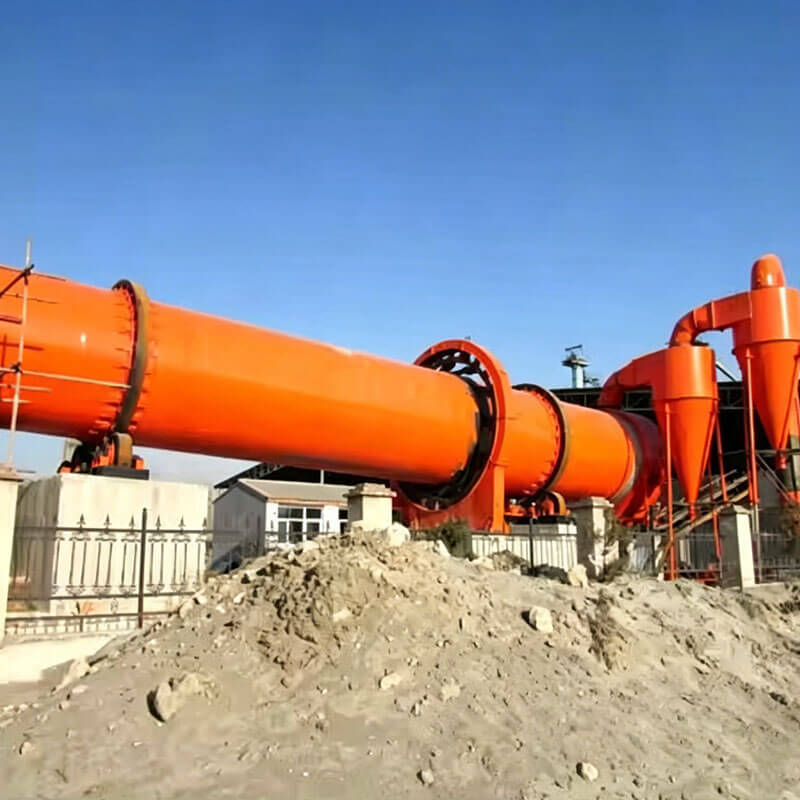
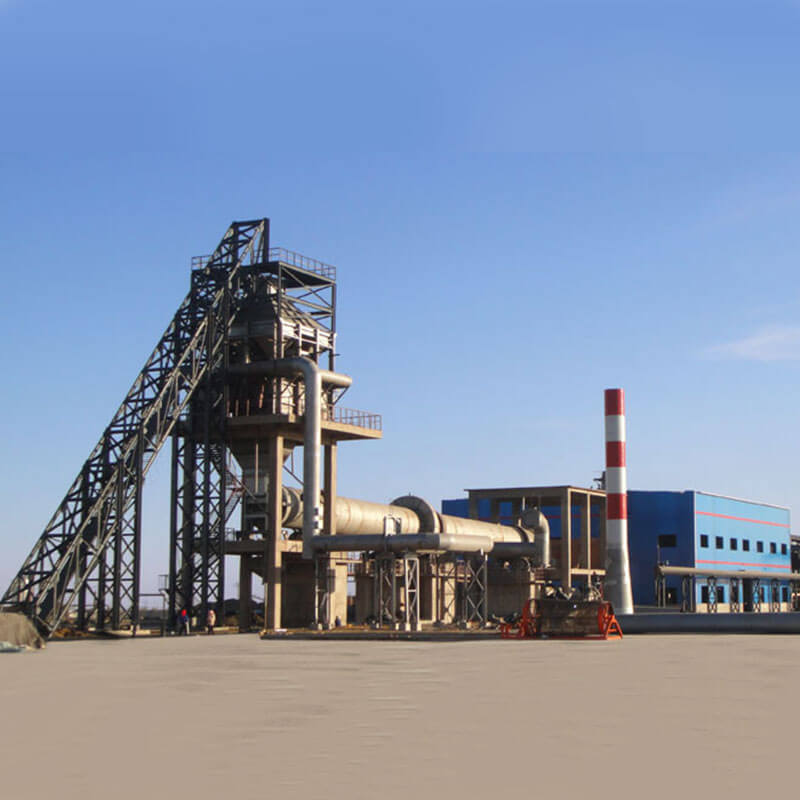
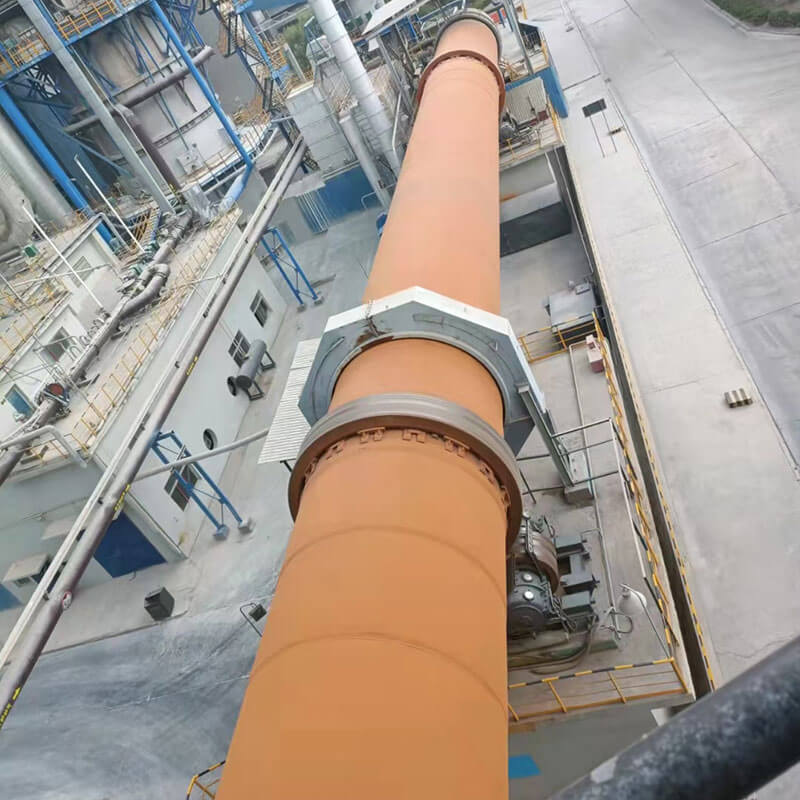
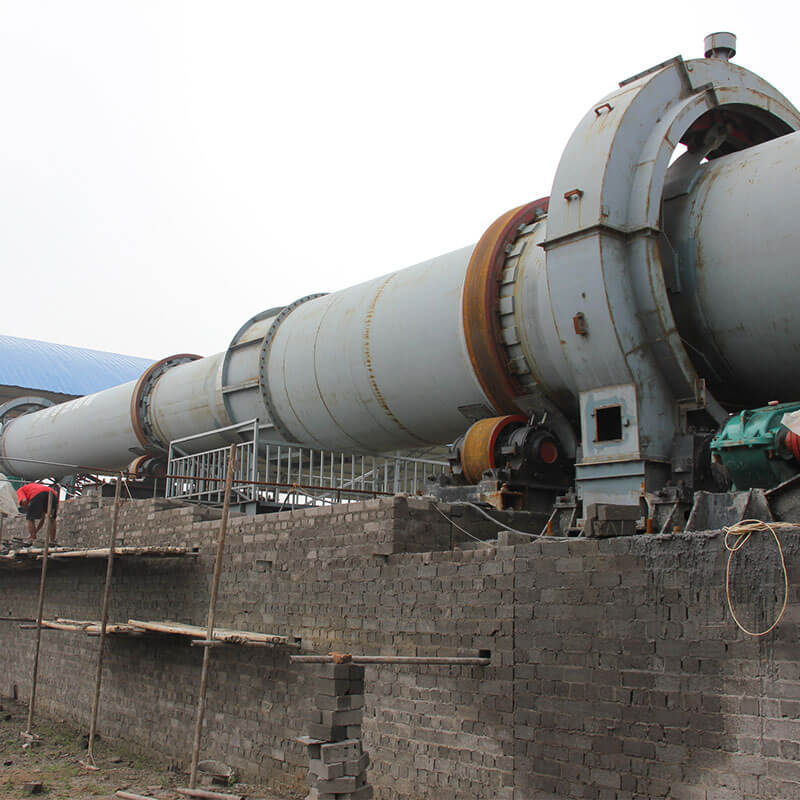
Cement Rotary Kiln Of Real Project Cases
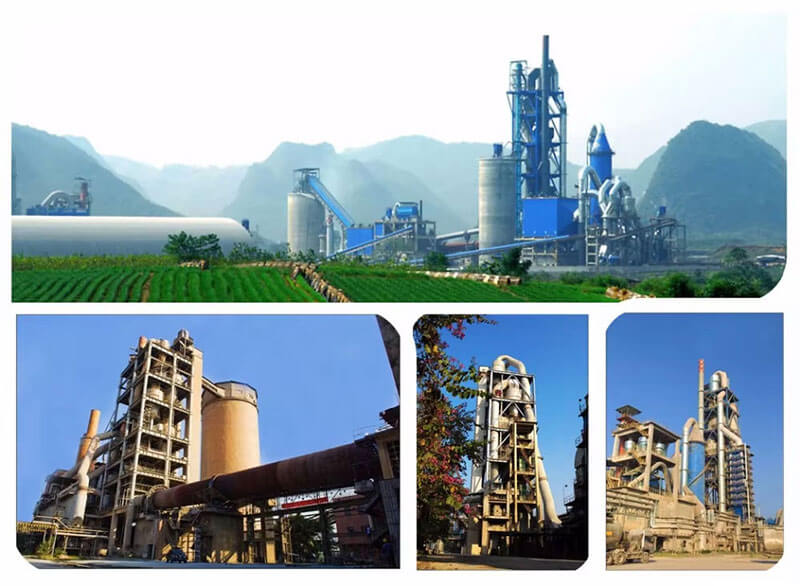
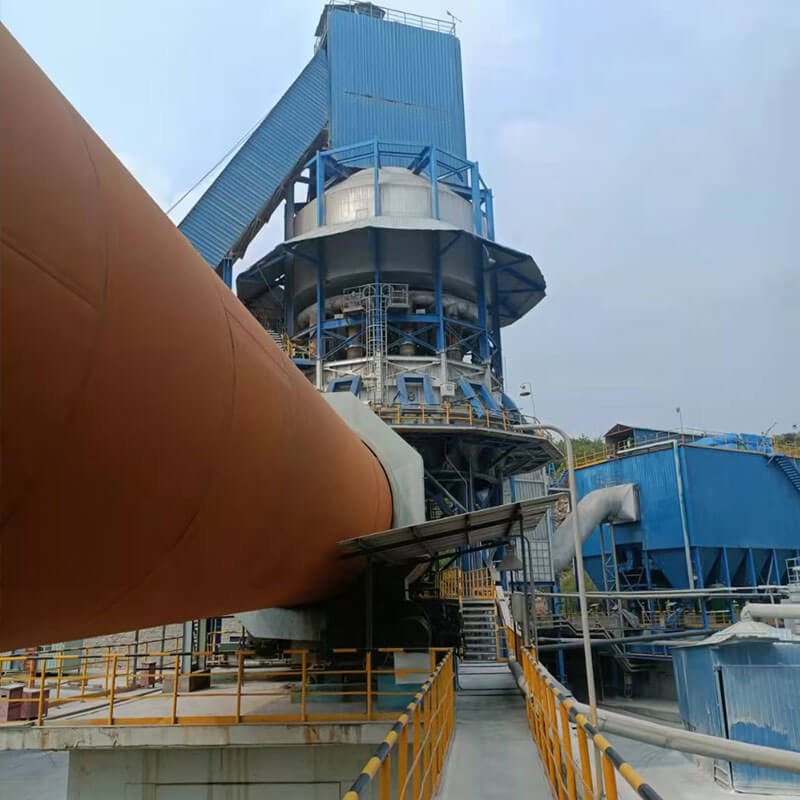
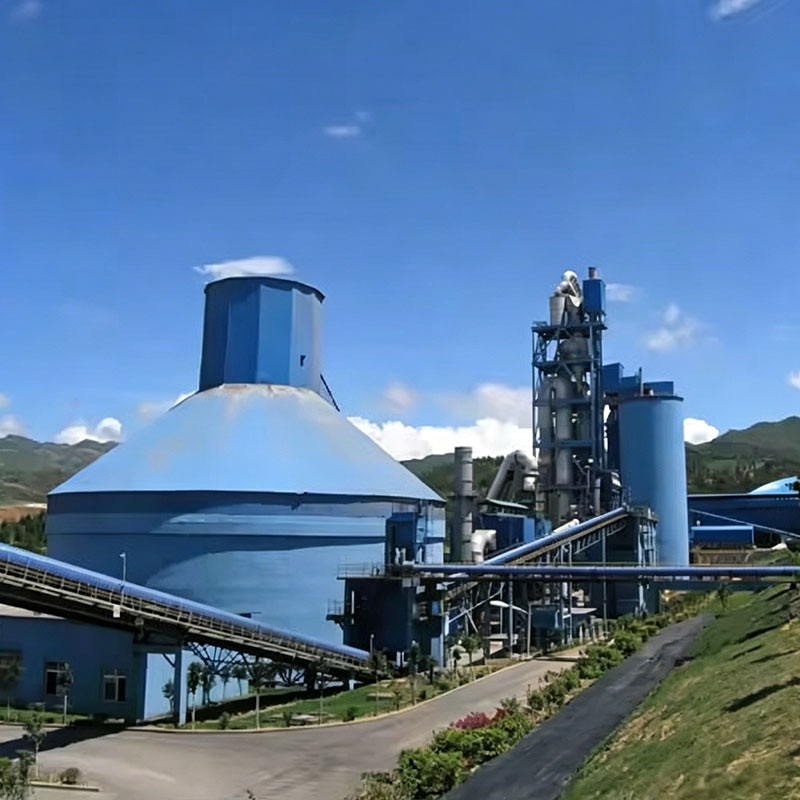
Case 1: 1000TPD Dry-Process Cement Production Line | Nigeria Cement Plant
Project Info: The customer needed medium-scale cement clinker production equipment with stable quality and low energy consumption. Our Φ3.0×48m cement rotary kiln was adopted, matched with complete preheating and cooling system. The intelligent temperature control system ensures stable clinker sintering quality, effectively reducing unit fuel consumption. The equipment runs continuously and stably all year round, meeting the customer’s large-volume commercial cement production demand.
Case 2: Energy-Saving Cement Renovation Project | Egypt Building Materials Factory
Project Info: The original old kiln had high energy consumption and unstable product quality. After replacing with our new energy-saving rotary kiln, the heat utilization rate is greatly improved, and the clinker qualification rate reaches 99%. The optimized sealing structure reduces dust emission, meets local environmental protection standards, and significantly improves the plant’s comprehensive economic benefits.
Case 3: Multi-Purpose Mineral Roasting Project | Indonesia Metallurgical Plant
Project Info: The customer’s production line needs to realize both cement clinker production and lime roasting. Our multi-functional cement rotary kiln with adjustable temperature and speed is adopted, which can flexibly switch between different thermal processing processes. The equipment has strong adaptability, stable operation and low failure rate, realizing multi-purpose use of one machine and saving project investment cost.
Technical Parameters of Cement Rotary Kiln
|
Item
|
Specification
|
|
Machine Model
|
Φ2.5×40 / Φ3.0×48 / Φ3.5×54 / Φ4.0×60m Customizable
|
|
Effective Rotary Kiln Length
|
40 – 60m Customized according to output
|
|
Processing Capacity
|
300 – 3000 TPD Cement Clinker
|
|
Rotating Speed
|
0.5 – 5 r/min Stepless adjustable
|
|
Kiln Inclination
|
1.5% – 4% Adjustable installation angle
|
|
Calcination Temperature
|
1200 – 1450℃ Precise constant temperature control
|
|
Applicable Fuel
|
Coal powder, natural gas, diesel, multi-fuel optional
|
|
Transmission Mode
|
Variable frequency motor + reducer stable drive
|
|
Core Function
|
Cement clinker high-temperature calcination, mineral roasting
|
|
Applicable Industry
|
Cement manufacturing, metallurgy, chemical industry, lime production
|
|
Core Features
|
Energy-saving, high output, stable temperature, long service life, low emission
|
Get Custom Cement Rotary Kiln Solution
Our Cement Rotary Kiln adopts modern energy-saving dry-process calcination technology, with core advantages of precise temperature control, high thermal efficiency, stable clinker quality and low operating cost. It provides reliable core equipment support for global new cement plant construction and old production line renovation projects, helping customers maximize production efficiency and economic benefits.
Contact us now for free production line design, model selection and accurate turnkey quotation!